Loving Animals is ALWAYS a Win-Win

By Judy Layne

I’m sure that you know about the SPCA’s fabulous 50/50 weekly lottery draw. Many lucky animal lovers have won and have taken home thousands, all while supporting homeless pets.

I caught up with Kenda, who has been the lucky jackpot winner not once but twice! But what makes Kenda really special is that she made a $500 donation after each win to give back even more to the animals! Kenda shared “I’ve been incredibly lucky. It was great to win, a shock even, but the best part of buying those weekly 50/50 tickets is having the opportunity to give back.” She continued “The 50/50 draws are brilliant. Everyone is a winner! Even if your ticket isn’t drawn, you can still feel like a winner knowing that your ticket purchase means the SPCA can continue doing the wonderful work they do.”

Giving back is nothing new for Kenda when it comes to animals. Throughout her life, her love of animals has inspired her to look for every possible opportunity to give back and to provide help to animals whenever and wherever it’s needed.
Her first memory of volunteering with animals goes back to elementary school. She was one of two students who took care of their school’s rabbit. That experience taught them about the responsibilities involved in caring for an animal. They were also required to pass along the knowledge they gained to younger students, teaching them to be kind to animals.

Kenda began her volunteer journey with the Nova Scotia SPCA by serving in various roles at both the Pictou and Dartmouth Shelters over the years. She walked dogs, cuddled kitties, cleaned kennels, washed dishes, did laundry – wherever help was needed.

Kenda didn’t stop there. She has assisted with fundraising events and has been a loyal monthly SPCA donor since 2014. Kenda shared “I would never discourage anyone from making a one-time donation in honor of a loved one or for special needs, but there is a constant need for dollars too. I have no doubt that the SPCA is extremely grateful for people’s generosity when there is a crisis (for example – hoarding situations, the damage the Sydney Shelter suffered from Fiona), but contributing on a monthly basis will hopefully help to ensure that the SPCA has resources to act immediately when necessary.”
I asked Kenda what inspired her to be so giving. She explained “Thankfully, I’m in a position to give, but like many people, I wish I could do more. That hasn’t always been the case, so I understand we all have our challenges in life. I wish more people realized they don’t necessarily need to donate hundreds of dollars; imagine what the SPCA could accomplish if hundreds of people donated a dollar each or gave one hour of their time each week.”

Kenda is passionate about advocating for animals. She shared “There are so many animals that need care, love and attention, and there are so many ways people can support the Nova Scotia SPCA. As most people know, you can donate, volunteer, foster an animal, and of course, adopt.  But there are numerous other ways.”

So true!! Maybe someone wants to help but isn’t financially able to, or perhaps they can’t commit to a volunteer schedule.  There are countless other opportunities.  Here are some:

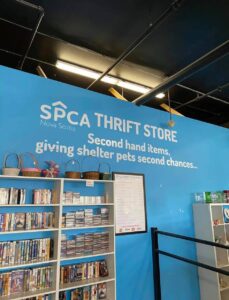
  • Donate items to an SPCA Thrift Store or your local SPCA shelter.
  • Grab a friend and see what bargains you can find at one of the SPCA Thrift Stores.
  • Be a mindful shopper and purchase things from one of the local businesses who support the SPCA. (for example, handmade bracelets from Links of Love; Bulwarks Cider [available at NSLC]; bandanas and dog collars from East Coast Lifestyle; and one I just discovered  – Rescue Coffee). All of these businesses give back to the community, specifically to the SPCA.
  • Organize a fundraiser or instead of having a traditional celebration and gifts for a birthday, anniversary or graduation, or ask friends and family to make a donation in your name to the SPCA instead.
  • Ask employers if a ‘Casual Friday’ can be implemented in the workplace and ask those who wish to participate to make a small donation to the SPCA.
  • Instead of receiving a thank you gift from a friend for dog sitting or watering their plants while on vacation, ask them to make a donation to the SPCA.
“Most importantly, and so easy to do – spread the word,” said Kenda. “Tell people about all the amazing things the SPCA does. Remind people of all the animals looking for a forever home and ask them to adopt, not shop – it will make their life so much richer. Don’t support ‘puppy mills’ or ‘backyard breeders’. Have your pets spayed or neutered. And PLEASE – if you see an animal being neglected, mistreated or abused in any way, REPORT IT!

And Kenda’s final thoughts? “Stories of happily-ever-after aren’t just for fairy tales. It’s an incredible feeling knowing you’ve helped the SPCA make those happily-ever-afters possible!”


With thousands of abused, neglected, injured, homeless animals to care for annually, please consider getting involved and making a difference in these animals’ lives. There’s a wide range of opportunities to engage and inspire you.  Click here to check them out.

Thank you to everyone who has plays and supports the SPCA Weekly 50/50. Animal lovers are winning thousands. Click here to check it out and get your paws on tickets.

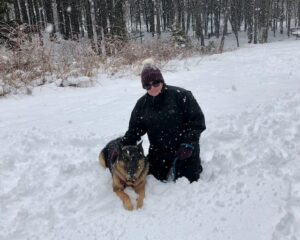
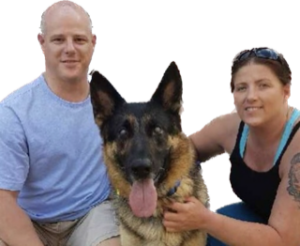
We wanted to honour the memory of Shadow, Kenda’s and her partner Doug’s beautiful German Shepherd rescue who shared their life for 5 wonderful years. Shadow and Kenda had a special bond, a connection, that words can’t describe. Kenda still has a t-shirt that reads “Sorry, I can’t………..I have plans with my German Shepherd.” Shadow, we know with your big heart and kind soul that helping to spread awareness would make you happy. We know you’re smiling up there.
Judy Layne

Judy is a dedicated volunteer with the Nova Scotia SPCA. She is committed to speaking for animals who cannot speak for themselves.

Saving Sugarbear with a Circle of Love

By Judy Layne

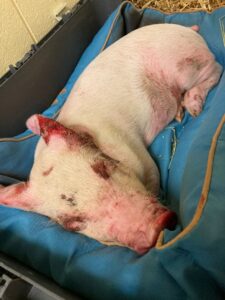
The little piglet was one of fifteen animals being taken by truck to a trader’s market. The animals were ultimately facing a bleak future. Perhaps the piglet decided to take destiny into his own hands and jumped off the truck. Or perhaps he fell. In any case, the piglet’s life was about to change. All because of a circle of love – a caring community – that would ultimately save his life and give him a chance for happiness. 

The next day, the piglet was found on the shoulder of the highway by a man driving by. The piglet likely spent the night in the ditch; he had made a nest there for warmth. This Good Samaritan immediately brought the piglet to safety at the Nova Scotia SPCA Kings Shelter in the back of his car. We don’t know the man’s name but want to thank him for his kindness in saving this precious soul.

Because the piglet was found wandering at large, he was accepted into the care of the SPCA under the Animal Control Bylaw for Kings County. Dana, the Supervising Enforcement Officer for Kings County, oversaw the piglet’s intake at the shelter.  Shelter staff named the piglet Newton, in recognition of the role gravity played in his destiny.

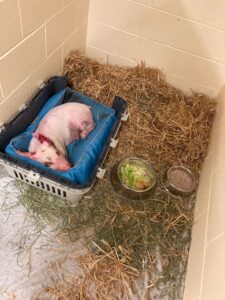
At the shelter, Newton received yummy food, a safe warm place to sleep, and rest after his difficult ordeal. The extent of Newton’s injuries was unknown. Providing him with the required medical care was complex. He needed to be diagnosed quickly and the Kings Shelter is not equipped to do extensive diagnostic tests. It would be a long trek to take him to the SPCA veterinarians in Dartmouth. And while the SPCA employs talented Small Animal Veterinarians, they do not have any Large Animal Veterinarians on staff. Everyone involved felt that the best decision would be to have Newton examined by someone experienced in farm animal veterinary care. In stepped Avon Animal Hospital.

The good folks at Avon saw Newton quickly. They provided an x-ray that confirmed that his injuries were superficial, and they administered antibiotics to prevent infection from his wounds. “We are SO grateful to Avon Animal Hospital for assisting us with Newton’s care,” said Dana. And Avon didn’t stop there! They suggested that once the holding period for the Animal Control Bylaw had passed, the SPCA should reach out to the North Mountain Animal Sanctuary (NMAS).

NMAS is a registered charity located in the Annapolis Valley. Their mission is three-fold:

  • rescuing farm animals from abuse, neglect and those who are at risk for slaughter
  • advocating for animals to end their exploitation and promoting compassion through education
  • providing a safe haven for animals, where they receive care and rehabilitation.

The Sanctuary currently provides shelter for goats, rabbits, pigs, chickens and many other animals. They are funded 100% by the generosity of caring individuals. I caught up with Amanda Dainow, the co-founder of NMAS.

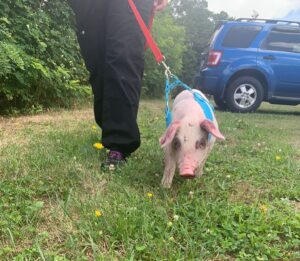
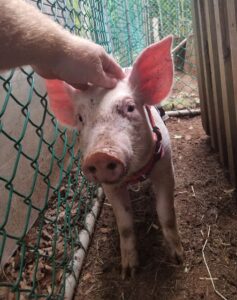
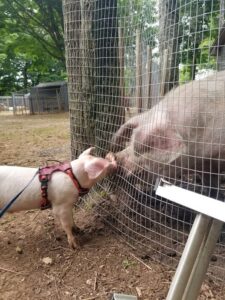
“We gave Newton a new name for his new lease on life,” said Amanda. “We named him Sugarbear to reflect his sweet nature and in honor of another rescued pig at a different sanctuary. Sugarbear is fed pig grain and vegetables several times a day and is allowed to run around in a large, fenced area to meet human and animal friends, including other pigs. He has a doghouse with hay and is transitioning to the pig area with an insulated barn. He receives lots of attention and loves to follow us around.”

Sugarbear is definitely thriving in his new forever home where he will live out his days in peace and happiness. Amanda shared “He is very energetic and loves exploring. Once, he even herded the sheep – we weren’t sure if he wanted to be a shepherd or a fitness coach!” chuckled Amanda. His two best pig friends are Wiggly, a 9-year old 500-pound pig and Lola, a 9-month old. Check out some of Sugarbear’s heartwarming Facebook videos by clicking these links: August 26. September 2. September 16.

Learning about the circle of love that surrounded Sugarbear reminded me of the saying “Teamwork Makes the Dream Work.” Along with kindness from a caring community, the paws-itive partnership between the SPCA and NMAS is a great example of two animal rescue organizations working together to save more lives and give more animals the chance for happiness that they deserve.

If you’d like to sponsor Sugarbear at NMAS, please contact them at info@nmas.ca. NMAS is always looking for volunteers. If you’re interested in helping support their compassionate mission, visit their website here or contact them at info@nmas.ca. Please note that the Sanctuary is not open to the general public. Amanda is a Clinical Herbalist with Certification in Holistic Animal Care. She makes and sells Bottom of Form natural products and conducts annual Plant Walks as fundraisers for the Sanctuary. Check out her website here.

Judy Layne

Judy is a dedicated volunteer with the Nova Scotia SPCA. She is committed to speaking for animals who cannot speak for themselves.

One Garfield Lookalike Changes Two Lives

By Taylor Huestis

Everyone knows that fostering and adopting is truly lifesaving for animals. But we often don’t stop to think about how it can be life-changing for people.

Erica began fostering back in 2019 with the Toronto Cat Rescue. “I originally wanted to have a cat of my own, but my mates suggested fostering since it would fit my lifestyle better,” Erica explained. “I work within the entertainment industry and that comes with a very transient lifestyle. But this also allows me to give these animals a second chance. I figured if humans could have second chances… why can’t animals? It only seems fair.”

After fostering four kitties in Toronto, Erica moved to Halifax and fostered another four kitties through the Nova Scotia SPCA.

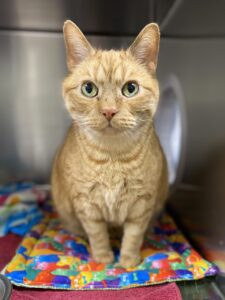
One of which was an orange kitty named Mokie. Closely resembling Garfield, Mokie was all fluff and love. But Erica was surprised to learn she had more in common with Mokie than she realized.

“Mokie came to me with pneumonia,” Erica recalled. “He was difficult to give pills to, but he taught me to have more patience and to put care first. It was very scary and sad. He was getting sick and ridding his body of the stuff in his lungs.”

At the same time, Erica was fighting her own health battle.

“I had triple positive breast cancer,” shared Erica. “Mokie, absolutely, was my helper. My meds after chemo were horrendous and caused lots of pain. Mokie would always stay with me and cuddle and be a companion when I was sick. So, basically, I took care of him… and he did the same for me.”
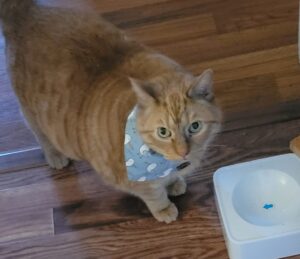
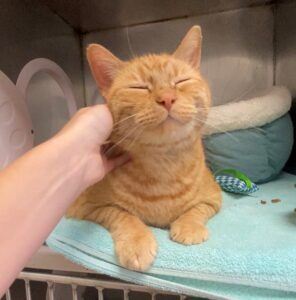
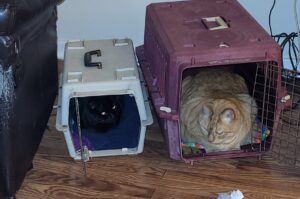
“Mokie also made sure I went to bed at a decent time,” Erica smiled. “And reminded me that I needed to shut the closets, or he would adventure on his own game of hide-and-seek. Mokie taught me that even if someone is sick, never give up on them, just be there for them.”

Erica’s battle with breast cancer included major surgeries and treatment. Instead of calling it cancer, Erica named it ‘Fred.’

“I’m lucky because ‘Fred’ was given the full boot via lumpectomy,” Erica explained. “Although I’m almost a full year NED (no evidence of disease), I have been doing treatments solid for the year. Now I’m two IVs away from completing the 4th major part of my treatment. Long story short, cancer is scary for so many people. It makes you realize who is standing in your court when it’s needed the most.”

One of Mokie’s specialties was making Erica laugh every day.

“I came home one day and saw he was on my bed,” Erica reminisced. “Suddenly I hear a thump and looked over to see him quickly climbing back up on the bed looking around like ‘okay no one saw me’ and went back to sleep. The next day I noticed he was sleeping in the same spot but with his arms stretched out to the wall… as if to prevent him from falling again haha.”

“Having Mokie was the best thing for me during a time I needed that little extra companionship,” Erica continued. “Animals understand us in a way humans can never. We don’t need to have words or say things… they sense it and they are so compassionate and they pick you. They choose you out of everyone. It truly is a fascinating thing.”

“Kindness has a ripple effect,” explained Erica. “Whether it is the simple act of holding a door, using manners, asking someone how they are doing… or in my case, helping an animal have a second chance at life and very possibly changing another human’s life in the process.”

And that is exactly what happened. When Mokie returned to the shelter, he came face-to-face with Carol.

“I met him and saw how calm and accepting of me he seemed to be,” Carol recalled. “I knew I wanted to take him home and introduce him to my other senior cat, Licorice. Although Licorice didn’t exactly play with him (that would be too obvious) she did start to copy him, and you could tell that even though she didn’t want to admit it that they were now friends.”

Sadly, Licorice passed shortly after. “But I know Mokie helped both Licorice and me get through a hard time,” Carol shared. “I love him so much for being there for Licorice, so she had the companionship of another great cat as she was used to for those last months.”

“Mokie is proof that one simple change or helper can make a huge difference,” continued Carol. “And how important it is to be around caring and loving energy. Now I get all the love and cuddles and get to enjoy Mokie’s antics and personality. I’m extremely grateful to have found Mokie and have him with me.”

Mokie’s life was saved, but he also completely changed two lives. Rescued pets give hope, humour, and help people find their own second chances.

Taylor Huestis

Taylor is the Communications & Development Officer with the Nova Scotia SPCA and proud adoptive fur-mama to Bonnie and Boy. She is passionate about raising awareness and funds for local animals in need. Connect with Taylor at thuestis@spcans.ca or 902-222-0378 today.

Halloween Hazards

By Judy Layne

Halloween is a festive time for children and their families, but it can be a scary and stressful time for pets.  The things that make Halloween fun for people – trick-or-treaters at the door, scary costumes, noises – can overwhelm many pets.  Some Halloween elements can also be dangerous and even fatal for our four-legged companions. Follow these tips to protect your pets on Halloween.

Never let your pets eat trick-or-treat candies or chocolates. Xylitol, a sweetener found in many candies and chocolate of any kind can be extremely toxic, even deadly, to pets.  Suckers, their sticks, and candy wrappers can be choking hazards that may require surgery to remove. Explain to everyone in the house, especially children, how dangerous Halloween treats are to pets.  Keep all treats out of your pet’s reach and dispose of all wrappers. When walking your dog during or following Halloween, ensure they don’t pick up discarded treats or wrappers.  If you believe your pet has eaten something toxic, contact a vet immediately.

Keep hazardous decorations out of reach.  Never keep a lit pumpkin or candles around pets.  If pets get too close, they can burn themselves or topple them and start a fire.  Curious kittens are particularly at risk.  Halloween plants like corn and pumpkins can cause stomach upset or intestinal blockage if pets swallow large pieces.  Fake blood and glow sticks may be toxic.

Be cautious using pet costumes.  Some animals like dressing up, but others dread it.  Don’t outfit your pet in a Halloween costume unless you know they don’t object. If your pet appears uncomfortable or distraught, take off the costume.  Signs of distress include hunching over, folded down ears or a tucked tail.  If you do decide to dress your pet up, avoid masks and choose a costume that doesn’t restrict her normal movements, breathing, hearing or vision. Remove any small or chewable parts that could come off and choke your pet.  Or go with a safe choice of costume, such as a loosely tied Halloween bandana.

Don’t leave pets in the yard on Halloween.  Cats are always safest inside the home, but on Halloween it’s critical to keep all pets inside.  Pets can become frightened and anxious by Halloween sights and sounds. Walk your dog before trick-or-treating starts. If you go trick-or-treating, leave your dog at home.

Keep your pets away from the front door.  Costumed strangers yelling loudly, a constantly ringing doorbell and flurry of activity can scare pets and they may dart out into the night. Ensure your pet is wearing proper ID – a microchip and/or collar with tags – in case they do escape and become lost. Dogs are territorial and even the most social pets can become agitated, panic and behave out of character (ie. growl, lunge, scratch, bite or run away). It’s safest to put your pets in a room away from the front door before trick-or-treaters arrive.  Play soft music or leave the tv on and provide water, a litter box for cats, a favorite toy or blanket and some special treats to make your pet comfortable and relaxed.

With a little planning, you can ensure that your pets have a safe and happy Halloween.

Judy Layne

Judy is a dedicated volunteer with the Nova Scotia SPCA. She is committed to speaking for animals who cannot speak for themselves.

Michaele’s Legacy of Love

By Judy Layne

We all have someone who left a lasting mark on our lives. Someone who showed us what unconditional love and kindness are. For Carol, it was her beloved sister-in-law, Michaele. Sadly, Michaele passed away in August 2020 after losing her heroic battle with a terminal illness.

Carol shared, “Michaele was the sweetest animal lover you’d ever meet. With a psychology background, she worked in the school system designing behavioral programs for children.  Combined with her caring nature, this enabled her to train a long line of beloved adopted cats over many years.”

Michaele was a huge supporter of the SPCA’s mission and life-saving work. She was a loyal monthly donor for many years before she passed. Carol explained, “I not only wanted to find a meaningful way to honor Michaele’s memory, but I wanted to support a cause that she cared deeply about. When trying to think of a long-lasting tribute to Michaele’s life, it struck me that her generous gifts to the SPCA would stop with her passing. So I signed on to be a monthly donor in Michaele’s name to the SPCA Sunshine Fund, to create a legacy of love and kindness that will continue to help homeless animals and families for years to come.”

Carol said, “I wanted to help more families have the same happiness that Michaele enjoyed with her pets. I know that many people are struggling in this Covid-19 world and the Sunshine Fund can help.” Carol is definitely right.  The Sunshine Fund at the SPCA Veterinary Hospital was designed to help families in crisis with urgent medical care for their pets, such as illnesses and injuries. Carol understands that many families may be unaware of what resources exist or may be embarrassed to ask for help. “This program makes it comfortable asking for help and surely deserves our support.”

Carol hopes that Michaele’s generous loving spirit will inspire more people to donate what they can to the Sunshine Fund to help keep more families and pets together. “Any monthly donation, no matter how big or small adds up,” stated Carol.  “I personally find that the fact that the gift is ongoing to be even more satisfying than a one-time donation. I’m sure that the SPCA staff and volunteers, along with families in need, would be encouraged by your caring.”

Carol’s final thoughts? “Michaele would be so proud to know that her legacy of love for animals will continue. She knew how important monthly giving is.”

Judy Layne

Judy is a dedicated volunteer with the Nova Scotia SPCA. She is committed to speaking for animals who cannot speak for themselves.

Honouring Henry: A Portrait of a Loving Dog

By Judy Layne

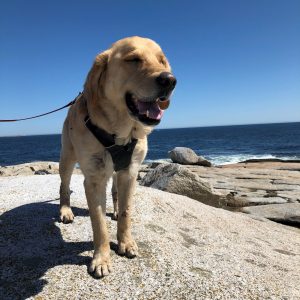
Each one of the precious souls who cross the Nova Scotia SPCA’s doorstep has a story to tell. This story is Henry’s. Sadly, Henry recently made his way to the Rainbow Bridge, but his parents wanted to honor his memory by sharing the love and happiness he brought to their life.

The first 10 years of Henry’s life were not filled with the attention and medical care he needed. Recognizing that they could not care adequately for Henry, his owner made the decision to surrender him to the SPCA. We are grateful that he made this decision because it changed Henry’s life.

Henry was in poor shape when he arrived at the shelter on February 14th, 2019. His skin was inflamed, he was extremely itchy and much of his fur was missing. Over time, with special baths, medications and a special diet, Henry made progress. Because he would need these things on an ongoing basis and in view of his age, he was placed in the SPCA’s Palliative Care Program. Then Henry’s life changed.

Sarah and her husband Curtis had been planning to adopt a puppy and dropped by the SPCA periodically to walk dogs. Sarah shared, “Walking the dogs allowed us to get our ‘dog fill’ until we could bring a deserving pup home. One evening, we were lucky enough to walk Henry!”

Henry definitely melted the couple’s hearts. “Despite being half bald and itchy, Henry was such a lovable goofball,” related Sarah. “You could tell he had so much love to give. We left the shelter talking about how sweet he was but thinking there was no way we could adopt a dog who would need so much care. But we couldn’t stop thinking about him and we returned for a second walk the next day.”

We had never fostered a palliative care pet before and wanted to ensure that we could give Henry the care and support he needed,” Curtis stated. “SPCA staff thoroughly explained the Palliative Care Program to us. We realized that we would have continual support from the SPCA throughout Henry’s time with us and that we didn’t need to worry about the potential financial burden that can sometimes occur when caring for a dog with complex medical needs.”

On March 14th, the couple decided to open their hearts and home to Henry as forever foster parents. They chuckled, “Henry adjusted to his new home immediately! He marched in, found his new toys and immediately started playing. He then plunked into his bed and had a good snooze!”

Henry thrived in his new home. Sarah shared, “He loved going for car rides, which is interesting since he initially had a lot of anxiety riding in the car. But he quickly realized that getting in the car usually meant good things! He also loved the beach. We always had him on a leash since he was a ‘flight risk,’ but he loved to bound down the sand with Curtis. Despite being part Lab, Henry didn’t like to swim! When we went in the water, we’d put him on a long lead so he had the option to stay on shore if he chose to. He’d always paddle out to us to make sure we were ok, then immediately hightail it back to land!”

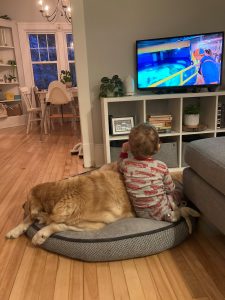
“Henry was such an important member of our family,” said Sarah. “He and our son were true buddies. When Charlie was sick or feeling down, Henry would snuggle with him. The way that Henry interacted with Charlie is something we’ll never forget. He was so patient and loving. Most photos we’ve taken of our son have Henry in the background somewhere.”

Henry’s care included medicated baths 3 times/week which tapered down to 1 every 2 weeks over time. Curtis explained “He was very tolerant of his baths and would jump into the tub with a little encouragement. He sat patiently while we blow-dried his fur and ‘neck flap’ which would get infected if it wasn’t dried thoroughly. He was on daily meds which we mixed with his food and he got daily ear drops. He did amazing with both. He never whined or complained even when he had an open sore or infection. The biggest challenge was getting a particular foul-smelling antibiotic into him. He could always sniff those pills out and spit them out!”

Sarah stated, “The SPCA was amazing – the love and support they showed for Henry, as well as us, was what kept us going through all the baths, medications and infections. It would have been challenging not only to pay for his ongoing medical needs, but also to readily get appointments with the vet. With the SPCA, it was always a relief to know that Henry would get the care he needed quickly, and from familiar faces who he felt comfortable with. Henry would actually get excited every time we brought him in for an appointment!”

Fostering Henry brought so much joy to our life,” exclaimed Curtis. “He was a great companion and he got us out of the house on a regular basis for walks which I’m sure benefited our health. It was also an excellent learning experience regarding dog ownership, and we are undoubtedly in a better position now to understand what it takes, or can take, to be a responsible dog owner.”

The couple shared, “When we brought Henry home, we thought we’d have a year with him at the most. We felt very fortunate to have him for three wonderful years. We knew when signed up to be his forever fosters that his time with us would be short, but we also knew he had a lifetime of love to give. Losing a pet is so hard, but fostering Henry was certainly worth the inevitable pain. Living in the moment is absolutely something he taught us.”

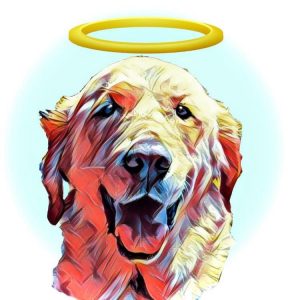
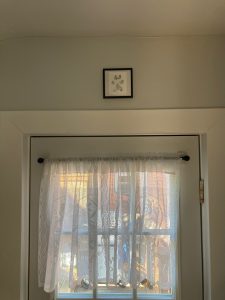
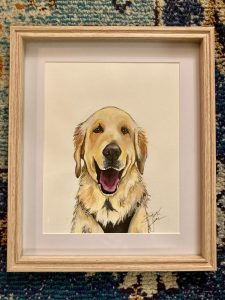
Henry passed away on April 8th in the arms of his foster parents, wagging his tail to the end, knowing that he was loved and that he mattered. He not only left paw prints on his parents’ hearts, but in their home as well. Curtis said “The SPCA kindly sent us Henry’s paw prints after he passed. We framed them and put them above our door to remind us of Henry when we’re coming and going; the door at which Henry would eagerly await his next walk or adventure. We also commissioned a painting of Henry by Sarah Jane Gilks when she was donating a portion of her pet portrait proceeds to the SPCA. His portrait will always hold a place of honour in our home.”


Please give a round of ‘ap-paws’ to the Nova Scotia SPCA Palliative Care Program. The program is a proud reflection of the SPCA’s no-kill policy.

Your generous support gives animals like Henry a second chance at a happy life. To learn more about this life-changing program and how you can help, click here.


Judy Layne

Judy is a dedicated volunteer with the Nova Scotia SPCA. She is committed to speaking for animals who cannot speak for themselves.