Love is Ageless – A Mom’s Letter to her Cat Gracie

By Judy Layne

Dear Gracie,

I have written this love letter to you a thousand times in my head.  I thought it was time to commit it to paper.

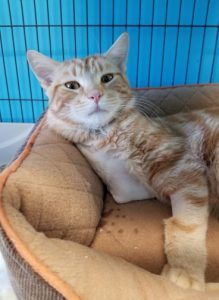
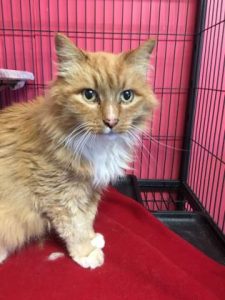
I can remember the first time I saw you. I wasn’t looking to adopt a kitty; I was volunteering at the SPCA Dartmouth Shelter. You were one of twenty cats hoping to be adopted that day.  You were a tiny girl, laying at the back of your kennel and easy to miss among the sea of people.  The card on your kennel said you were 12 years old.  I watched you grow sad as people passed you by and headed over to see much younger cats and kittens.  Your soulful amber eyes shone with the wisdom that comes from a life of hardship.  To me Gracie, you were the prettiest girl in the room.
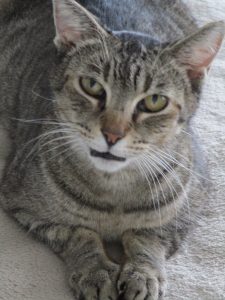
I loved you from the moment I saw you. When I learned your story, I loved you even more.  Your previous owners decided they didn’t want you any longer and abandoned you out into the cold.  You would have died but for a kind lady who spotted you and brought you inside to safety and warmth.  You were in bad shape health-wise and had likely been stray for some time.  She took you to the SPCA where you received much-needed medical care – due to a bad diet, all your teeth were removed and you were given antibiotics for severe respiratory and ear infections.

I remember bending down to pet your soft head and telling you everything would be alright; that you would never be rejected or unloved for even a second, ever again. I scooped you up and we headed to your forever home.

The fact that you were 12 years old didn’t matter to me.  It’s the quality of life that’s important, not the quantity.  You know that Mom’s heart has always gone out to older homeless animals.  It’s so much harder for them to understand why they ended up in a shelter through no fault of their own.  And like you, Gracie, senior pets are often overlooked for being ‘too old’.  Yet older pets have so much love to give; so many good times still ahead.  Mom showed you photos of your fur-brothers and sisters – all seniors when I adopted them – Katie, Harley, Maddie and Tarko. They’ve since crossed the Rainbow Bridge but they all lived their best life when they were here.
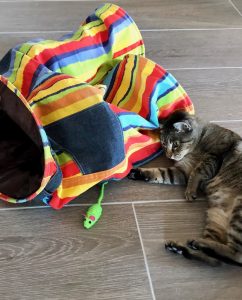
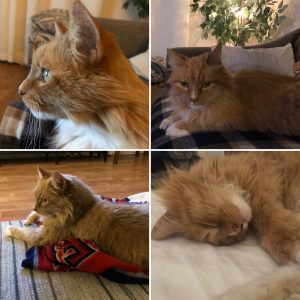
Our first few weeks together were filled with much newness.  As you began to realize that you were truly ‘home,’ your personality began to shine.  I rejoiced in your happiness as you discovered how much fun it was to chase toy mice through your ‘Crazy Pants.’  And who said you can’t teach an old dog (or cat) new tricks?  You proved them wrong Gracie as you became a whiz at floor hockey, whether shooting the puck or defending the goal.  You also busted the myth that senior pets won’t bond with people so late in life.  You’re always there at the door to greet Mom when I come home and you love to sit on my lap to watch tv.  You’re a real snuggle-bug in bed and your gentle morning kisses wake me up better than any alarm clock! How I’ve loved seeing you become a thriving happy cat Gracie.

Gracie, thank you for proving that love is ageless.  You ask for so little and give so much.  I don’t know whether we’ll have lots more years together or just a few.  I do know that you remind me to live in the moment and to value the unconditional love and laughter we share.  I promise to be by your side as we move through life and when it’s finally time for you to cross the Rainbow Bridge, I will once again bend down to pet your soft head and tell you everything will be alright; that your brothers and sisters will be there to welcome you; that I will love you always because you have left your pawprints on my heart.

Love Mom
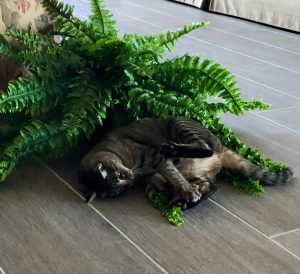
There are lots of terrific older pets just like Gracie that deserve loving families.  Check out the SPCA Adoptables and visit one of our shelters to meet the amazing seniors looking for their forever homes. One of these special souls may just be perfect for you! Meantime, here are some great reasons to adopt a senior pet.

  •  Many older pets find themselves in shelters through no fault of their own.  Death of a guardian or move to a personal care home, loss of a job, divorce, allergies, relocation, and other life changes can result in owners surrendering their pet.  Sadly, some pets are simply abandoned and others are rescued from cruel situations.
  • With an older pet, ‘what you see is what you get’.  Kittens and puppies are undeniably cute, but they’re still growing and developing personalities. Older pets are full-size and their personalities and temperaments have already developed, so you’ll know if they are a good fit for your family.  Many older pets actually blossom once they feel safe and comfortable in their new home.  And remember, kittens and puppies don’t stay little very long.
  • Older pets have good manners.  Most older pets are already housebroken and litter-trained, saving you the time and energy needed to teach a kitten or puppy bathroom etiquette, not to mention cleaning up little ‘surprises’.  Kittens and puppies are full of energy and often get into mischief when they’re bored.  While older cats still like to play and older dogs still enjoy a daily walk, they are often content to just chill out and relax in your company.
  • You can teach an old dog (or cat) new tricks.  Older pets are just as smart as younger ones and have a greater attention span than kittens and puppies. Dogs can be trained at any age and older dogs have likely mastered basic commands. Older cats can be trained with patience, practice, and rewards.
  • Older pets make great companions for seniors.  Due to their lower energy level, older pets are easier to care for. Many elderly people find comfort in the calm presence of a companion who is content to move through life at a slower speed.
  • Most older pets have many years of life and love left to give. Many cats live into their late teens or early twenties. Dogs live 10-15 years on average and many can live longer depending on breed. For those reluctant to adopt an older pet because the possibility of a painful loss seems closer, remember that life offers no guarantees.  Quality time together means so much more than quantity.
  • Older pets have a level of gratitude and loyalty that’s unmatched.  They seem to sense that they’ve been given a second chance at happiness. In return for a furever  home, you will be the lucky recipient of love as unconditional as it is enduring.
 

Judy Layne

Judy is a dedicated volunteer with the Nova Scotia SPCA and proud adoptive fur-mama to Gracie. She is committed to speaking for animals who cannot speak for themselves.

Healthy Teeth Make For Healthy Pets

By Judy Layne

Good dental hygiene is just as important for pets as it is for people.  If in doubt, imagine how your teeth would look and feel if you didn’t brush them for weeks or even years!  Your pet’s teeth are no different.  Unless you regularly provide some form of dental care, you’re ignoring a vital part of your pet’s overall health.

Gum (periodontal) disease is by far the most common major dental problem in cats and dogs.  According to the American Veterinary Dental Society, by the time they are 3 years old, more than 70% of cats and 80% of dogs show early signs of the disease, which will worsen as the pet grows older if effective preventive measures aren’t taken.

Gum disease starts when bacteria combine with food to form plaque on teeth. Initially, plaque is soft, so brushing or chewing kibble and toys can dislodge it. Plaque soon hardens to form tartar and if ignored can lead to gum inflammation, causing them to be red, swollen and bleed. Tartar above the gum-line can be seen and removed, but tartar below the gum-line is harmful and may lead to infection and damage to the tooth, jawbone and surrounding tissues. This is very painful for your pet, but the good news is that these issues can be prevented before they start with proper dental care.

Gum disease doesn’t just affect your pet’s mouth. Advanced gum disease can have serious impacts on your pet’s heart, kidneys, and liver.  Pets are good at hiding pain; you may not know that your pet has a serious problem until it’s very advanced. That’s why it’s crucial to take your pet in for regular dental checkups and professional cleanings.  Remember that the adverse effects of dental disease far outweigh any small risk posed by anesthesia.

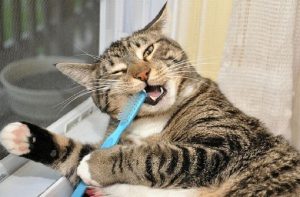
Regularly brushing your pet’s teeth at home is the most effective thing you can do to keep your pet’s mouth healthy between professional cleanings by your vet. Most dogs accept brushing, while cats can be a bit more resistant, so patience is key. Start out gradually for a minute at a time, using flavored toothpaste specifically made for cats and dogs, treats and lots of praise so your pet comes to have a positive association with brushing.  Use a child’s toothbrush or finger brush; never use human toothpaste. The web has many helpful videos about brushing your pet’s teeth. Brushing several times a week is ideal.  Don’t try brushing for the first time if your pet’s gums are red or inflamed – visit your vet for an assessment.

Your pet’s teeth should be checked at least once a year by your vet.  Visit your vet sooner if you observe any of the following problems:

  • bad breath
  • teeth that are discolored or covered in tartar
  • broken or loose teeth
  • difficulty chewing, dropping food from the mouth or drooling
  • reduced appetite or refusal to eat
  • pawing at the mouth
  • pain or swelling in or around the mouth
  • bleeding from the mouth.

Always be careful when checking your pet’s mouth, because an animal in pain may bite.

What else can you do to keep your pet’s teeth clean? Aside from regular brushing and professional cleaning, your vet may recommend a plaque prevention product and/or switching to a dental diet designed to improve bad breath and prevent plaque and tartar build-up.  Certain treats and toys also promote good oral health.

Good dental care, both at home and at your vet, plays a key role in helping your pet live a longer, healthier life.


Did you know that the Nova Scotia SPCA’s Pet Health Insurance plan includes routine dental coverage and each policy purchased helps support our shelters?  To learn more, click here


Judy Layne

Judy is a dedicated volunteer with the Nova Scotia SPCA and proud adoptive fur-mama to Gracie. She is committed to speaking for animals who cannot speak for themselves.

Show Your Love & Fix Your Pet

By Taylor Mundy

Beginning way back in 1979 and continuing for the next three decades, Bob Barker, host of the Price is Right, finished each episode with his mantra message:

“This is Bob Barber reminding you to help control the pet population – have your pets spayed or neutered.”

Bob’s voice is one among thousands who have helped create a humane movement to reduce the numbers of homeless animals and help save lives.  Spaying/neutering is one of the most important things you can do for your pet, your family and your community.

Here are just a few of the many benefits:

  1. Your pet will live a longer, healthier and happier life. Studies show that, on average, the lifespan for spayed/neutered pets increases by 1-3 years for dogs and 3-5 years for cats.
  2. Your pet will have less unwanted behaviour.  Unfixed dogs and cats are much more assertive and prone to urine-marking and spraying.  They are more likely to roam, howl, and display unwanted behaviours including aggression.
  3. You will save money in the long run.  Spaying/neutering helps to avoid expensive serious health problems in the future. It is much less than the cost of having a litter of new mouths to feed and care for.
  4. You will help save lives. Pet overpopulation is a direct outcome of unplanned, unwanted litters that could have been prevented by spaying/neutering.

If you have been wanting to get a dog or cat fixed but the price-tag has stopped you, we may have a program to help!

  • Low-Cost Spay/Neuter Program – We operate three animal hospitals and clinics that are available to low-income families for subsidized spay/neuter surgeries. This program makes the service affordable and accessible to help pet owners keep their pets with them long term, reducing unwanted behaviours and an overall happier and healthier pet and owner.  Find the location closest to you and apply here.
  • Prevent Unwanted Pets (PUP) Program – Accidents happen! If you unexpectedly find yourself with many new sets of tiny paws in the house and don’t know what to do, contact us right away.  We will fix your female dog or cat for free AND fully vet and find loving families for the puppies or kittens.  Apply here.
  • Trap, Neuter, Return (TNR) Program – This program is for feral (wild) cats in the community. Feral cats are fixed and returned to their local colony to reduce the cycle of unwanted breeding and the number of stray and abandoned animals.  Young kittens and friendly cats are socialized and find loving families.  Report a Cat Colony here.


Reducing pet overpopulation begins with you, so please ‘spay it forward.’ On February 20th, World Spay Day, help us celebrate and shine a spotlight on the importance of fixing companion animals and feral cats.  The price is still right, Bob Barker.

Taylor Mundy

Taylor is the Communications & Development Officer with the Nova Scotia SPCA and proud adoptive fur-mama to Bonnie. She is passionate about raising awareness and funds for local animals in need.

Three Legs & Limitless Love: Ron’s Story

By Judy Layne

All pets deserve love and attention.  Pets with special needs require extra love and care, and include animals that are blind, deaf, have missing limbs, dietary/medical needs, chronic illness, allergies, or behavioral issues such as separation anxiety.

 Special needs pets are not defined by their limitations.  Although they require some dedicated care or training, they are no different in most respects from any other pet. Their challenges make them no less loving or lovable and they can adapt to their circumstances much better than you think. A three-legged pet will still run and play, while a deaf or blind pet will depend on other senses to navigate his home and interact with people.

Take Ron – a handsome 9-month old ginger tabby who was brought to the Kings SPCA with injuries to his front leg.  At our SPCA Animal Hosptial, we determined that Ron’s leg was shattered – likely he had been hit by a car – and it was best for Ron to have his leg and shoulder amputated to prevent a lifetime of discomfort.  Post-surgery Ron was on bed rest, pain meds and antibiotics for one week.  He spent the next few days having supervised exercise time to help him adjust to his new body.  Fully recovered from his operation, Ron was ready to find a loving home.

What do special pets like Ron need?  Special guardians – people with big hearts willing to step up to give these animals a loving home and a second chance at the happiness they deserve.  Enter Bryanna.  For some time, Bryanna and her partner Kyle had been contemplating getting their seven-year-old cat, Guiness, another friend.  “I’m a big believer that animals choose their guardians and that was what happened with Ron.  I met him and fell in love even before I knew his story.  The rest is history,” says Bryanna.  Just like that, Ron was adopted!

Bryanna reports that Ron “handled his amputation like a champ” and adapted nicely to his new home.  “He moved into our bedroom until fully healed before meeting his new brother.  He eventually learned to navigate his new home.  Things like learning how to do stairs again and using the litter box came with practice.” The lack of a leg hasn’t slowed Ron down “He loves chasing toys and wrestling with his brothers (Ron usually wins!).”

Besides being full of love, Ron is full of surprises.  “He’s a giant foodie,” states Bryanna “which isn’t very compatible with his need to maintain a healthy weight to prevent joint issues.  Even with three legs, he’s a master of climbing counters, opening cupboards and even his Rubbermaid food tote.  One night, Ron stole a bag of chips that was on top of the fridge, so we need to ensure we keep food out of reach!  He also loves going for car rides, especially to our cabin in summer.”

“Our biggest surprise was how Ron took to caring for various kittens I have fostered,” says Bryanna. “Ron’s first foster baby was Melvin.  Ron was more than happy to help Melvin learn what being a cat was all about.”  In fact, Melvin is now Ron’s forever brother. “This summer, I fostered 5 orphaned kittens and ‘Mama Ron’ was a big help.  He always ensured that everybody was cleaned up after feedings, provided much needed snuggles and taught the kittens good manners so they can grow up to be their best selves.”

“We are so proud of Ron’s accomplishments,” relates Bryanna.  “He is an SPCA ambassador for educating the public about life with three legs.  Just this week, Ron was at the shelter for a visit with 25 Sparks, helping the kids learn about animals with special needs and about the SPCA’s work.”

What advice would Bryanna give to people about adopting a special needs pet?  Do your research.  We have compiled some below for you to start!  Be prepared for the commitment that comes with pet ownership.  Know what you need to do to help your new family members adapt to their new life and know what to expect in the future. We see all types of special needs at the SPCA and most of the time, the solutions or changes needed are simple. I have seen leg amputations, eye removals, deafness, food allergies, senior animals and simply ones who are very shy or nervous. They have all found the perfect families for them and are now living their best lives.”

Please consider being special and adopting a special needs pet. If you can’t adopt, you can still help to give deserving animals like Ron a chance to live their best life.  Please donate today!


Understanding the commitment involved in adopting a special needs pet is crucial to a happy healthy relationship. There are important things to consider before adopting a pet with special needs.
  • Think about any long-term dietary requirements, special medications or treatments your pet will need. Pets with behavioral issues may need special training; those with mobility challenges may need therapy or surgery.  Ensure you can fit these costs into your family’s budget.
  • Your pet may need medications/injections at specific times of the day. Ensure you’re available to do this.
  • Talk with your family about the challenges that come with adopting a special needs pet and ensure everyone’s on board.
  • Your pet may need more frequent vet visits. Pets with an injury or physical disability may need assistance with standing or walking. Some may need you to physically accompany them outside for bathroom breaks, as opposed to simply being let out.
  • The Nova Scotia SPCA makes every effort to place special needs pets with their perfect human match.  Before deciding to adopt, speak to shelter staff since they’re familiar with the animal and consult with your vet to get a good understanding of the pet’s ongoing requirements.  Whatever the pet’s special needs, the SPCA will be there before and after adopting to support you by providing information and advice.
Judy Layne

Judy is a dedicated volunteer with the Nova Scotia SPCA and proud adoptive fur-mama to Gracie. She is committed to speaking for animals who cannot speak for themselves.

A Circle of Love: The Tale of Toque & Mittens

By Judy Layne

You may have heard the saying “It takes a village to raise a child.”  I think it takes a community – a circle of love – to ultimately save an animal’s life and give them a chance for the happiness they deserve.   The tale of two adorable kittens, Toque and Mittens, is a great example of a circle of love at work.

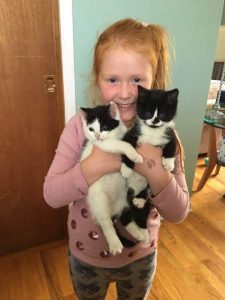
Toque and Mittens had a heartbreaking start in life – they were found in a dump.  A worker at the dump saw them barely escaping a car right before it was about to be crushed!  This kind man immediately brought the kittens to safety at the Pictou SPCA.  We want to thank him for saving these two precious souls.

At only five weeks old, the kittens were too young to be put up for adoption.  Being semi-feral, they also needed to be socialized, to build their confidence and adaptability and ease their transition to a new forever home.  So, after receiving much needed medical care at the shelter, the next step was to find the kittens a loving foster home.

In stepped Angel Lefave, a new foster fur-mama.  Angel said, “In November 2019, I was blessed with my first two foster kitties.  They were very scared when I brought them home.  We let them hide for a few days but would gather them up for snuggles.  In a short time, the kittens were not only comfortable with us and our home but were demanding snuggles themselves!”

The fostering experience was a win-win for Angel.  “For a few years, I had wanted a pet but was afraid to take the plunge.  Through the SPCA’s foster program, I gave a nurturing home to two precious animals who loved me back and got them ready to bring tons of love to a forever family.” Angel sums up the foster program purr-fectly…..”You supply the love; the SPCA supplies everything else.”

And the last part of the circle?  While I was on the Pictou Shelter Facebook page, I saw a heartwarming post from Jenny Hasselman under Angel’s post about her foster kittens.  It read “Hi Angel.  We are the family that adopted these wonderful kittens!  It’s clear that your TLC was magic.  Toque and Mittens are very happy in their new home.  Our two kids are thrilled and the cuddles are endless.”

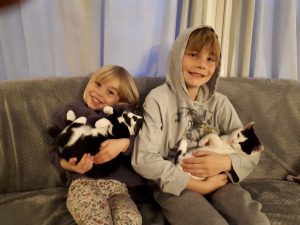
Jenny told me “We were specifically looking for two sibling kittens; we wanted our kids – Simon and Melanie – and the cats to grow up together.  They had been around our older cat so they understood that pets require work, love, and care.  Now they have the chance to watch Toque and Mittens grow and learn.”

“It took the kittens a few months to seek out cuddles on their own, curling up on the kids’ laps,” related Jenny. “Seeing the quiet calm and sweet joy that brought to the kids was incredibly rewarding.  At that moment, they learned about patience paying off, trust, the pure love that comes from raising a pet and what family truly means.”

“The time, care and love that Angel poured into the kittens was EVERYTHING”, said Jenny.  “Toque and Mittens were found in the wild and could very easily have been challenging to socialize and even more difficult to adopt.  Angel was incredibly thoughtful, making a card to describe each kitten’s personality and confirming they had been carefully introduced to small children and dogs.  This information helped to ensure that the SPCA could place them in a home that was right for everyone.  It’s a wonderful keepsake too, giving their history and making the kittens feel instantly like part of our family. “We will always be grateful to Angel for her kindness and generosity.”

Learning about the circle of love that surrounded Toque and Mittens reminded me of something Mother Teresa said.  “Not all of us can do great things.  But we can do small things with great love.”

There are so many ways to support the SPCA in their tireless work on behalf of homeless animals.  Learn more about how to share your love.  


Judy Layne

Judy is a dedicated volunteer with the Nova Scotia SPCA and proud adoptive fur-mama to Gracie. She is committed to speaking for animals who cannot speak for themselves.

Jethro’s Happy Tail

By Taylor Mundy

Jethro’s eyes could tell stories.  As an eight-year-old stray kitty, he struggled to survive in the cold outdoor elements.  Jethro was scooped up and brought to the Nova Scotia SPCA to be nursed back to health.

We noticed right away that Jethro was limping and had a few broken teeth.  He was lethargic, thirsty and was constantly filling his litter box.  We knew he desperately needed medical attention.  We have in-house veterinarians at our SPCA Animal Hospitals and Clinics, so Jethro was able to be cared for right away.

Upon further investigation, we found out why he was limping.  Two of Jethro’s toe beans on his right paw were deformed from previous trauma.  The decision was made to undergo surgery so it would not become worse or cause any more distress.  But that wasn’t all.

Jethro’s bloodwork showed that he has early renal disease.

This results in the gradual loss of kidney function.  Although there is no cure, with diagnosis and treatment, you can help boost both the quality and length of life.  Because of his diagnosis, Jethro joined the SPCA Palliative Care program.  The SPCA Palliative Care program is where we continue to pay for the pet’s ongoing medical care while they live with a loving family.  This allows senior pets with manageable health concerns to live the rest of their lives happy and healthy.

Lynn Redmond has always been a supporter of the SPCA.  In fact, she helped start a fundraiser for Noble Grape called “Wine and Whiskers” raising nearly $2,000 to help local pets in need.  So, when Lynn and her husband decided they were ready for a furry friend, they headed straight to the SPCA.

On the way there, they chatted that a 3 or 4-year-old short-haired cat would be ideal.  Jethro convinced them otherwise.  He came right out of his kennel to greet them and practically jumped into their arms.  Jethro had a palliative sticker, so they headed to the front desk to inquire and found out about his kidney disease.

This hit home for Lynn’s family.  Her husband had donated a kidney to his father more than 20 years ago and he had been living with them for the past 6 months until he passed away in December.  They turned to each other and Lynn’s husband said, “obviously we are taking him… he has kidney disease.”  Lynn agreed!

“Jethro was the perfect choice to bring a little happiness into our home,” says Lynn.  “His favourite things to do are meow for dinner, drink water out of my glass on the nightstand, watch bird videos on YouTube, and play with an old tape measure (despite the fancy toys we got for him).”

“It is a big decision to decide to adopt a palliative pet, but it is so rewarding to see Jethro happy and purring,” Lynn shares.  “He is so loving and affectionate, and we are happy to keep him safe and warm for the remainder of his time with us.  We can’t remember life before Jethro, it’s like he’s always been here.”

“With the support from the SPCA, we have extra time to love and take care of him without the added stress of his medical expenses. Plus, seniors are awesome!  Lots of naps and cuddles.  I have already told friends looking to adopt about this great program.  Our hearts are full.”  Jethro’s heart is full, too.


You can help cover the medical costs and save lives by donating to the SPCA today.  Click here to give another pet, like Jethro, a second chance.


Taylor Mundy

Taylor is the Communications & Development Officer with the Nova Scotia SPCA and proud adoptive fur-mama to Bonnie. She is passionate about raising awareness and funds for local animals in need.