What do a Nova Scotia SPCA Thrift Store, a marathon, and a quilt have in common?
The Mud Creek Rotary Club! Specifically, the Environmental Committee.
 In September 2025, Ginette Goulet reached out to the Nova Scotia SPCA about a fundraiser and partnership that made us tilt our heads and wag our tails.
The details? They would be raffling hundreds of tickets for three quilts that three of the Rotarians made out of marathon T-shirts, with proceeds going towards the Nova Scotia SPCA.
The Mud Creek Rotary Club has been supporting the “youth” segment of the Valley Harvest Marathon for a few years, allowing youth to participate for free. But this year they found out something new.
“Our partnership with the organizer, the Blue Nose Marathon, led us to understand that there were hundreds, if not thousands, of surplus race t-shirts being held idle in a warehouse and had an uncertain future prior to this project. Hearing of our interest in textile waste management, they challenged us to repurpose these shirts, and thus, support their diversion from landfill. We took up the challenge!” Ginette explained.
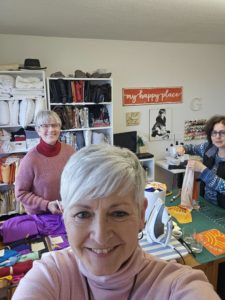
And so, three local Rotarians, Janet MacNaughton, Ann Booth and Ginette Goulet, the T-shirt Trio, went to task, deconstructing over 50 shirts, designing the pattern and sewing the patchwork for a total of three quilts.
But then came the question, how will these quilts help the community? After all, the Rotary and its members share the same interest: to help and create lasting change in the world. 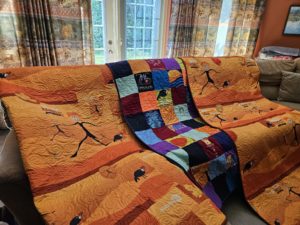
This is where our thrift store came into play. Our thrift stores are not only about making a difference to local animals in need, but in the environment as well. So, for Ginette and her Rotarians it seemed like a no brainer.
Ginette told me, “As I stated earlier, I’m a confirmed thrifter. SPCA’s thrift stores, wherever I’ve lived, have always been on my thrifting tours. The decision to partner with the SPCA was unanimous among our club members. Our upcycled project was an obvious fit with the SPCA. And I do have a cat, Stella. All of my previous cats were adopted from the SPCA.”
The Nova Scotia SPCA has five thrift stores across the province in Dartmouth, Sydney, Truro, Stellarton, and New Minas. While some people might think we only carry pet items, we’re so much more than that.
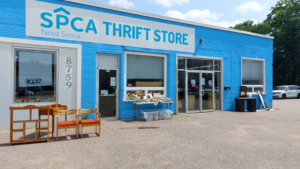
Clothing – for humans! – is our biggest donation and selling item. We also have items like houseware, accessories, books, kitchenware, and toys. And this is where Ginnette advises people to start looking at on their journey to sustainability. She said, “When it comes to textile sustainability, my best advice is to start in our closets. Closets hold most of the textiles in our lives. Closet organizing is a powerful tool for reducing textile waste. It encourages mindful ownership, better garment care, and reduced consumption. Thrifting is not only a major player in the realm of solutions, it is also becoming very much a mainstream approach to shopping.”
A small, but powerful idea and move! And we might be a little biased when we say that thrift stores are a great way to give second chances all around, whether you’re buying or donating items.
Ginette agrees with that statement. “I choose to thrift shop because it’s a simple, meaningful way to live more sustainably. Buying secondhand gives clothing and household items a second life, keeping them out of landfills and reducing the demand for new production. It saves water, energy, and materials while also supporting local charities and community programs. I love that thrifting allows me to express my personal style creatively and affordably — finding unique pieces that tell a story. Most of all, it reminds me to be mindful about what I buy and to value quality and reuse over convenience and excess.” 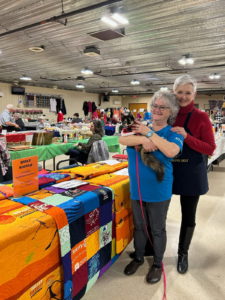
This partnership reminded us about the importance of community, what it means to work together, and all we can accomplish when we collaborate. It also reminded us that second chances come with unique backgrounds and stories, each one worth telling, be it that it’s someone’s first time running a marathon, someone joining a Rotary Club for the first time, a pet being with their loving family, or an item finding a new home.
So, we encourage you to visit one of the Nova Scotia SPCA thrift stores, support the marathon when they return, join the Rotary Club, and create a community where every action counts.
Together, we can make second chances second nature.

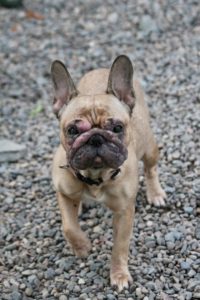 When Luna first arrived at the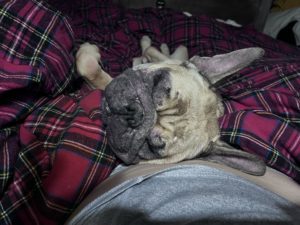
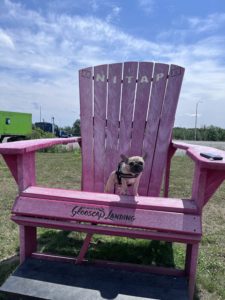 Luna settled into her new home seamlessly. “It was like we had always been together,” says Angela. “She settled right in and didn’t take long to realize this was her home and she was staying with ‘her’ human.”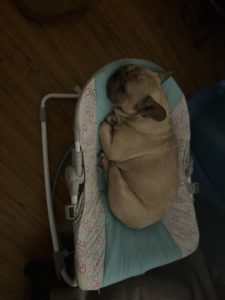

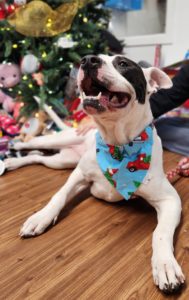 “Scooby’s sweet face, along with his story, drew us to him,” said Tara. “There was just something about him that spoke to us more than any other dog (no offence to the other dogs; of course, we want all of them to have amazing homes). Scooby exuded kindness through his pictures, and his photos said we have to take him home now! The fact that he is an amputee didn’t concern us; it was actually the icing on the cake! When I read that Scooby was missing one of his hind feet, I felt like it was meant to be as I lost the same foot as him due to an infection.”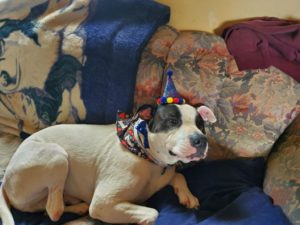
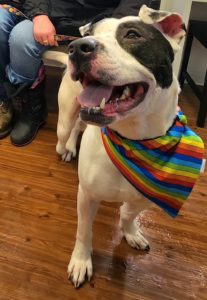 The family had adopted special needs pets before, but they weren’t specifically looking for one when they saw Scooby. “All of the stars aligned, and Scooby came into our orbit,” exclaimed Tara. “Having Scooby missing the same foot has helped me feel seen. I can also interpret how he might be feeling body-wise based on my own experiences with my amputation. It’s truly an exceptional and surreal experience!”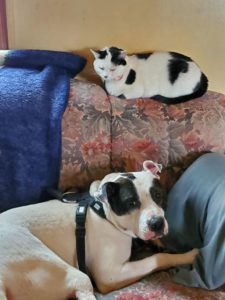
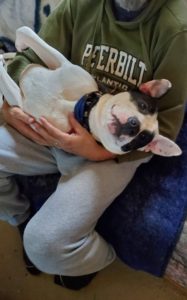

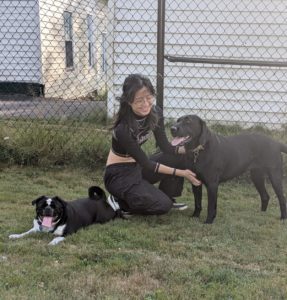 As a child, for a moment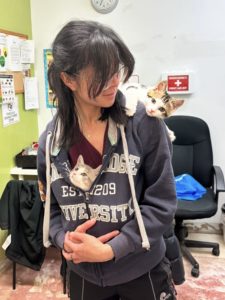
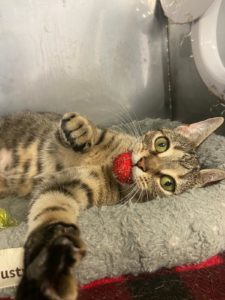 “When Covid-19 hit, we realized we would be staying put for the foreseeable future,” says Rosalie. “As four cat lovers, we decided that the SPCA’s kitten fostering program would be a great fit for us. We didn’t want to add another permanent member of our family until we felt more confident in what the future held.”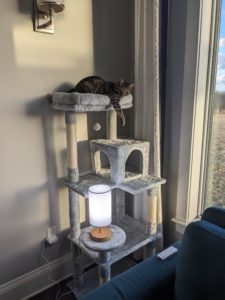
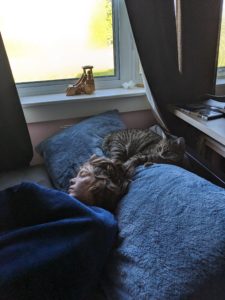 “The SPCA called and left us this message: ‘We have bad news. Tula doesn’t have cancer. If you want to keep her, you’ll have to pay to adopt her,’” says Rosalie. “So, as you can imagine, it was quite a roller coaster of emotions. It was so exciting to learn that she wasn’t terminally ill, and there was never a question about whether we would keep her. She was clearly part of our family. We feel very lucky to be the ones to adopt her.”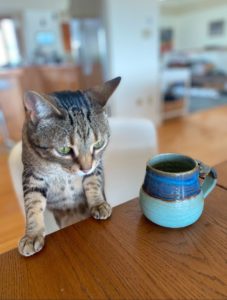
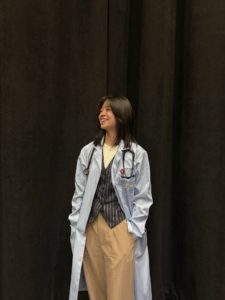
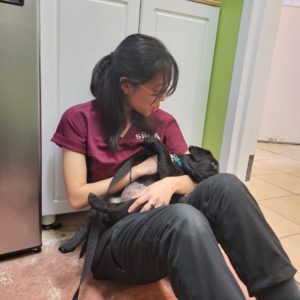
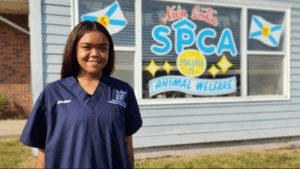 That is something Jacelen David did. Her love for animals started at a young age. If you looked for Jacelen, she was most likely caring for a hamster, guinea pig, bunny, fish, cat, or her greatest love, a dog. It felt only natural that the answer to “