In 2021, the SPCA opened the Nova Scotia SPCA College of Animal Welfare, a licensed private career college to help address the shortage of veterinary support staff in Nova Scotia.
 To date, the College’s impact on the animal care sector in Nova Scotia has been tremendous. Seventy-two students have graduated from the Veterinary Assistant (VA) program, most of whom went on to accept full-time positions as VAs. This spring, the College’s inaugural Veterinary Technician (VT) program is anticipated to start, which is also expected to have a widespread positive impact on the sector in Nova Scotia.
While the opening of the College is a great step towards improving the state of Nova Scotia’s animal care sector, the SPCA recognizes that its work is far from over. There is a troubling lack of diversity in the animal care community, which is problematic when serving an ever-growing diverse Nova Scotia.
A diverse workforce is important as it brings varied perspectives, fostering creative problem-solving and leading to better health outcomes for animals. Diverse staff can bridge language gaps and understand cultural or religious nuances in animal care, increasing trust. Finally, it can better tailor services to underserved communities, ensuring that animal welfare resources are available to everyone, regardless of background.
This past fall, with the help of a generous TELUS Community Board grant, the SPCA launched a new career exploration program focusing on the opportunities available in animal care. It’s a five-week program open to youth ages 12 to 16 from Black, Indigenous, and People of Colour (BIPOC) communities.
The program gives youth participants a glimpse into some of the different careers that are available in the animal care sector. It helps them understand what courses they need to select in high school if they’re interested in pursuing certain careers in the field after they graduate.
The desired program outcome is that more youth from underserved communities in Nova Scotia decide to pursue a career in animal care after graduating from high school. As a result, the animal care community will be better able to serve the underrepresented voices in Nova Scotia.
The program is coordinated by Jacelen David and Marissa Polchis, both graduates of the Nova Scotia SPCA’s College of Animal Welfare VA program and members of the BIPOC community.
Jacelen was delighted when asked to assist with the coordination of the program.
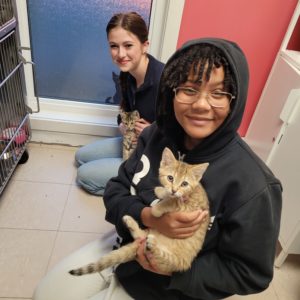 “Programs like this are important because they create access for BIPOC youth. There aren’t many of us represented in this field. It helps youth see themselves in careers that maybe they never really imagined themselves being in,” she said.
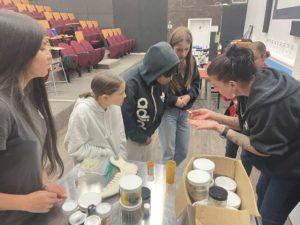
When developing the program’s content, their goal was to make the program as educational and engaging as possible.
“We incorporated a lot of interactive and hands-on activities into the program, so that the participants weren’t sitting and listening all of the time,” said Jacelen.
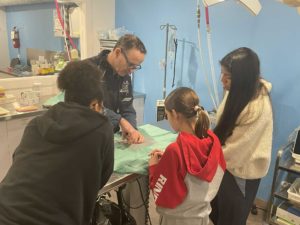
They were taken on a private tour of the Dartmouth SPCA Shelter and Tartan Tails Veterinary Hospital, where they got to visit areas not accessible to the public. They also got a chance to speak with industry professionals like Dr. Michael West, a licensed Veterinarian, and the Nova Scotia SPCA College of Animal Welfare Director of Veterinary Programs. While meeting with Dr. West, they learned about his day-to-day responsibilities and were given the opportunity to ask questions and share some of their own experiences. He also gave a demonstration on how to remove sutures from an animal undergoing surgery.
For many of the youth participants, including 13-year-old Khloe, this was a highlight. 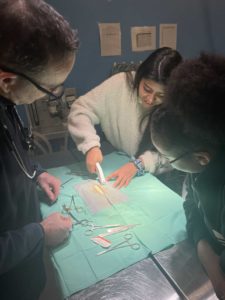
“My favourite part of the program was being able to see what goes on behind the scenes at the SPCA. It was interesting to see how they operate and the tools they use to help animals. I also really enjoyed getting to see and hold the animals,” she said.
In addition to educating participants about the different career opportunities available in animal care, the program teaches participants a variety of practical skills that are beneficial should they decide whether to pursue a career in animal care or not. Some of these skills include learning the principles of responsible pet ownership, how to safely handle a cat and dog and how to read a cat and dog’s body language. Participants used a stuffed dog and cat to practice their safe handling techniques to simulate a real-life experience.
Khloe thoroughly enjoyed her time in the program and feels that her involvement will benefit her in the future.
“I’ve always loved animals. Being able to participate in this program was exciting and fun. I think this experience will help me a lot if I decide to pursue a career in animal care.”
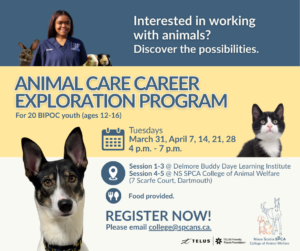 The program successfully wrapped up its fall session in November. Participants of the fall session met at the North Grove in Dartmouth for the first three weeks and at the Nova Scotia SPCA for the final two. The program is being offered again this spring for up to 20 BIPOC youth at the Delmore Buddy Daye Learning Institute in Halifax.
Jacelen and Marissa are looking forward to welcoming the next group of youth into the program. “I really enjoyed spending time with the youth and learning about what they want to do later in life,” said Jacelyn.
For information or to register for the upcoming spring session scheduled to start on March 31st, please email: college@spcans.ca.
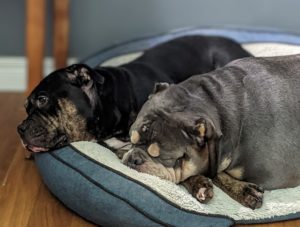
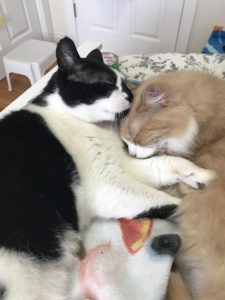 They waited in the shelter for a couple of months, and one lucky day they found their perfect family.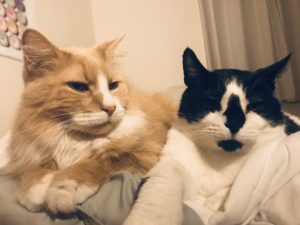
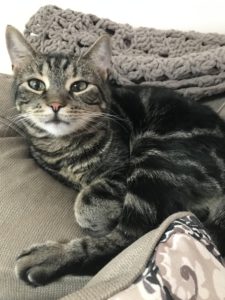 And Archie is affectionately known as the ‘OG kitty.’ He’s calm, patient, and loving. He’s more independent and enjoys his alone time as much as getting pats from his family. But he also loves to play – especially chasing his human brother around the house with a string toy.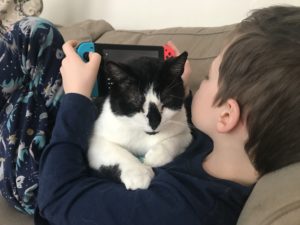
 Rocky’s prayers were answered on June 6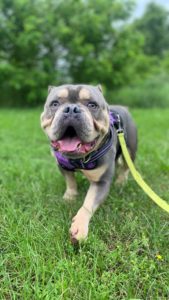
 Fast forward to today. Rocky is definitely thriving in his forever home. Jessica chuckled “He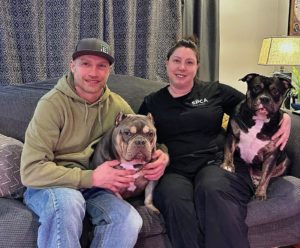
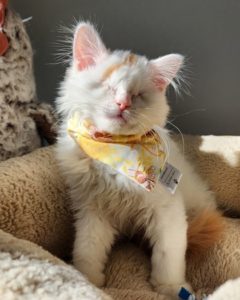 When Daphne first arrived at the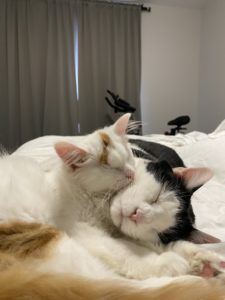
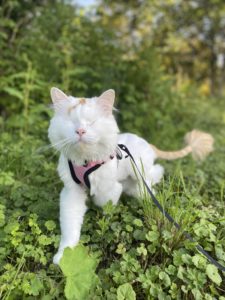 Not only has Daphne learned to navigate life indoors, but exploring outdoors has quickly become one of her favourite things. With patience, Maya trained her to wear a harness and ride in a stroller. When her first spring arrived, Daphne became even braver by exploring on a leash.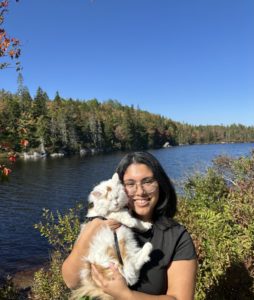
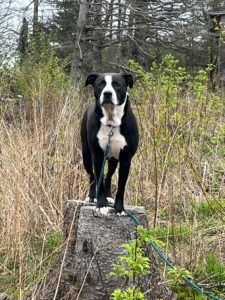 Luckily, she wouldn’t have to wait much longer. Audrey, a veterinarian with three cats, was looking for a dog to share outdoor activities with. Audrey had grown up with all kinds of animals, but especially dogs. Her family always chose the dogs with the most difficult history and the ones that were the hardest for shelters to adopt out. They had adopted a Chow Chow, Pittie x Rottweiler mix, German Shepherds, a Shih Tzu, a Chihuahua, and a Cattle dog mix. Her family also had cats, a rabbit, and some fish. With Audrey’s history and her knowledge as a veterinarian, it’s hard not to think that she and Pebble were destined for each other.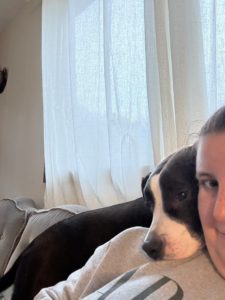
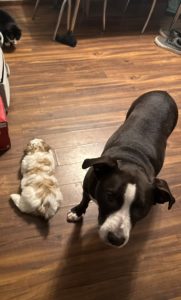 Audrey and her partner made the decision recently to make another addition to their furry family. They adopted a 15-week-old puppy named Chunk. As soon as they brought Chunk home, Pebble became like a mother to him. No longer timid and fearful, she has become patient and loving. In Audrey’s own words, “Sometimes Chunk likes to hang on and dangle from her neck rolls.” It’s here that Audrey believes Pebble’s patience shines as she’ll simply look at her with an expression that reads as “Mom, the baby is being annoying again.” While Pebble has enthusiastically taken on the job of mentoring Chunk, the puppy has decided to take it upon himself to bring out Pebble’s playful side.
  Actually, it’s not entirely true. It was Halloween, yes, but as in any animal shelter, the
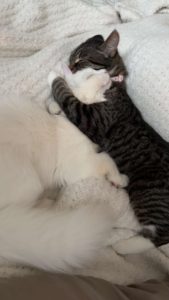 With the scary days behind him and with a new name, Dash didn’t waste any time making his new home his kingdom. Once in the apartment, he explored every nook and cranny, found his favourite spots, and settled into supporting all university students who needed it.