Birthday Pawty

By Taylor Mundy

We know how special your birthday is.  You can make your birthday celebration even more special by throwing a party with a purpose.  Instead of gifts this year, ask your friends, family members and colleagues to donate to the SPCA in your honour.  You’ll truly be making a difference for local animals in need.

Need some inspiration?  Check these out:
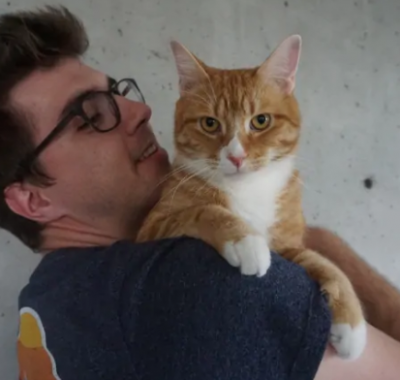
For Christian’s birthday, he generously donated 100% of the proceeds from his amazing Apollo Reddit app to help furry friends at the SPCA.  He also donated $1 for every retweet on his Apollo Reddit twitter.  More than $27,000 was raised making this the largest one-day third-party fundraiser in history for the Nova Scotia SPCA!
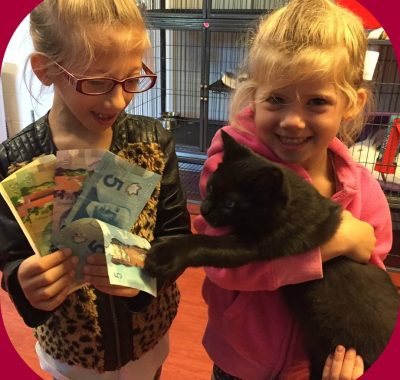
Maddie asked for donations in lieu of gifts to celebrate her fourth birthday.  She dropped by the Yarmouth SPCA with her sister Elliot to drop off the donations.  Our shelter pets were eager to give lots of thank-you cuddles for her kindness.
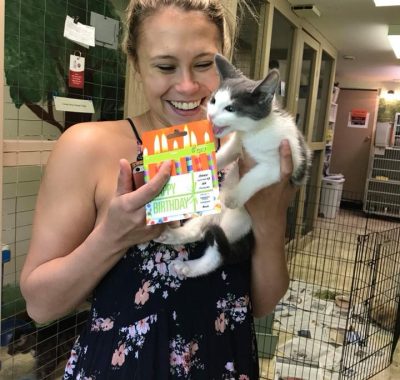
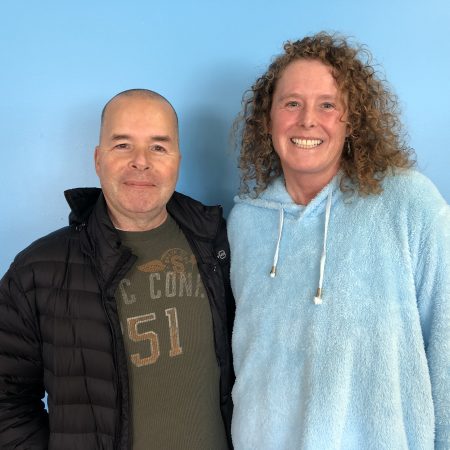
Animal lover Robyn dropped by the Pictou SPCA for her birthday.  Not only did she give our animals some TLC, but she also gave a very generous donation in honour of her special day.

Facebook makes it super easy to engage with your friends and raise funds for SPCA furry friends at the same time.  We receive the donations within 90 days and allocate them to the shelter or region of your choice to help local animals in need.  A few weeks before your big day, create an online fundraiser by following these three steps:

  1. On your Facebook Homepage under “Explore” click “Fundraisers”
  2. Click “Select Charity” and search for The Nova Scotia Society for the Prevention of Cruelty
    *Note* You must use our full legal name in your search and not “SPCA”
  3. Set your goal and end date
  4. Tell your story and select your photo
  5. Share away and do a happy dance because you’re helping save lives

Do you remember your best birthday ever?  Let’s bring that feeling back.  Celebrate a lifesaving birthday this year and donate to help animals in need at the SPCA!

P.S. Need some fundraising support?  We’re here to help!  Please contact Taylor at tmundy@spcans.ca
Taylor Mundy

Taylor is the Communications & Development Officer with the Nova Scotia SPCA and proud adoptive fur-mama to Bonnie. She is passionate about raising awareness and funds for local animals in need.

Moving in the Right Direction

By Taylor Mundy

For many pets, animal transport is a life-saving measure.  Here at the Nova Scotia SPCA, we transport pets for several reasons!

  • Rescue from Unsafe Conditions – Our SPCA Enforcement Team is constantly on the road rescuing animals from dangerous and deplorable conditions. Enforcement Officers currently travel over 165,000 kilometers a year and receive an average of 2,000 calls annually.
  • Receive Life-saving Treatment – We currently operate three SPCA Animal Hospitals and Clinics in Dartmouth, Yarmouth and Sydney, Cape Breton.  By bringing hurt pets to our SPCA Animal Hospitals and Clinics we can perform surgeries for our shelter pets at a fraction of the cost and maximize funding to the fullest.
  • Manage Capacity – The Nova Scotia SPCA is proudly no-kill and open-admission, so transporting pets helps to manage capacity.  We strive to serve the community and local animals the best way possible.
  • Better Chance at Adoption – With six shelters throughout Nova Scotia, we have the flexibility to relocate animals to where they will have the best opportunity at finding their new family.
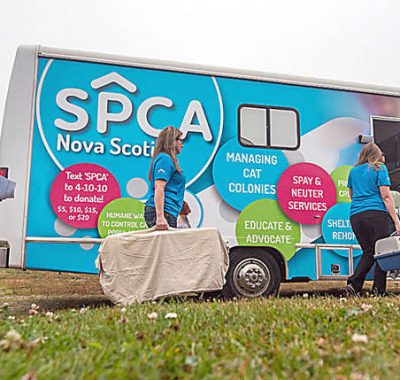
SPCA Mobile Unit used for Trap-Neuter-Return

Over the last couple of years, the Nova Scotia SPCA has experienced some exciting ‘paw’sitive trends in the companion animal population.  The numbers of stray animals coming into our shelters have been decreasing.

Programs like Trap-Neuter-Return (TNR) have helped address the overpopulation of feral cats, while programs like Prevent-Unwanted-Pregnancy (PUP) have helped families who unexpectedly find themselves with a surprise litter of puppies or kittens.  These trends in Nova Scotia are very encouraging.

Louie came to the Nova Scotia SPCA through the PUP program!

With so many other shelters and rescues overwhelmed with excess populations, we offer a helping paw.  For several years we have accepted dogs from other provinces in Canada due to breed-specific-legislation.  Furthermore, this past March we partnered up with Frieda Fuzzypaws Animal Rescue, a nonprofit animal rescue based in Pelican Narrows, a Cree settlement, in Northern Saskatchewan.  Six cats made the cross-country transport to the Dartmouth SPCA and were all adopted within the week.

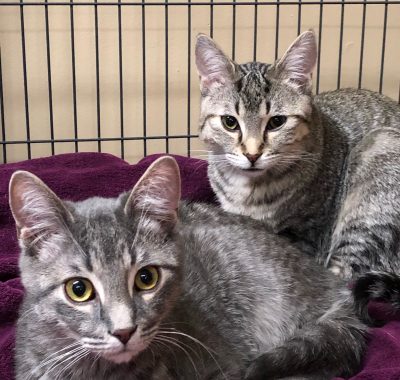
Two cats that made the cross-country transport to the Nova Scotia SPCA

Most recently we have brought in 30 kittens to the Cape Breton SPCA from the Southwest Coast SPCA in Stephenville, Newfoundland.  The kitties board the Marine Atlantic Ferry and travel to our shelter to find loving families.

The ultimate goal is to transport animals – not diseases… so it is important when implementing a pet transport program to take proper precautions to ensure the health and safety of the animals – both those being transported and those here in our province.  Safe transport methods and guidelines minimize risk and maximize life-saving capacity.

You can help!  Donations and supplies are especially needed to protect pets and ensure their transport is as stress-free as possible.  Together, we can drive animal welfare forward.

Taylor Mundy

Taylor is the Communications & Development Officer with the Nova Scotia SPCA and proud adoptive fur-mama to Bonnie. She is passionate about raising awareness and funds for local animals in need.

Biscuit’s New ‘Leash’ on Life

By Judy Layne

We’re sure that many of you remember Meeka, the sweet girl who touched so many hearts in February.  Meeka came to the Nova Scotia SPCA through a cruelty seizure in Pictou, having severe head trauma. Luckily, her story has a happy ending, as Meeka found a loving forever home with the foster family who cared for her. Her road to recovery is still long, but she is thriving in her new home and enjoying life to the fullest.

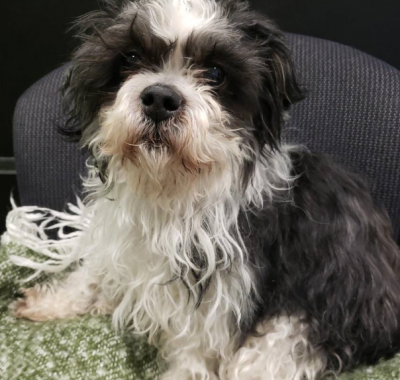
Biscuit – Before

You may not know that another precious little soul was seized along with Meeka.  His name is Biscuit and we wanted to share his story.  The first 12 years of Biscuit’s life were not filled with all the care and love he deserved.  When he arrived at the SPCA Colchester Shelter he was thin, matted, had cataracts and heart disease.  Initially, Biscuit was very withdrawn.  He never moved from the back of his kennel and always kept his head low.  After being diagnosed with a 4/5 grade heart murmur, he was placed in the SPCA’s Palliative Care Program.

The program was a perfect fit for this cutie-pie.  While to many people, the term ‘palliative care’ is associated with dying, the Nova Scotia SPCA’s Palliative Care Program is about living.  It’s about ensuring that senior pets and those with compromised health like Biscuit get to live out the rest of their days in a foster home filled with love, caring, comfort and happiness.  Since the program began in 2009, over 45 animals have participated.  The program is a proud reflection of the SPCA’s No-Kill policy.

Sandra Flemming, SPCA Provincial Director of Animal Care, tells prospective foster families that “all they have to do is provide the love.  The SPCA covers all other costs including food and medical care.”  With hospitals on-site at three SPCA shelters, required veterinary care can be provided at no charge to the foster while the animal lives in a loving forever foster family.

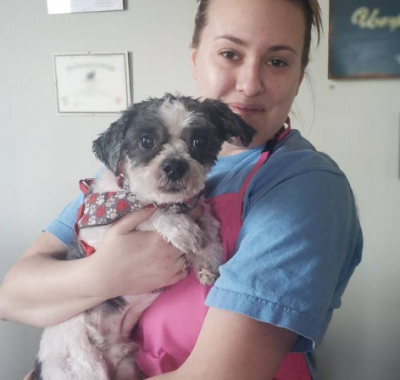
Biscuit – After

Jessica said that “Biscuit stole my heart the first time I met himHe seemed to gravitate towards me like I was his safe place.”  Jessica had previously fostered 4 dogs and a multitude of kittens and cats, but Biscuit was the first palliative care pet she considered fostering. “We had a family discussion since it’s a big decision to make when you have small children.  My kids completely understand that Biscuit won’t be with us for a long time, but they know that we can give him the best life we can while he is still here,” Jessica shared.

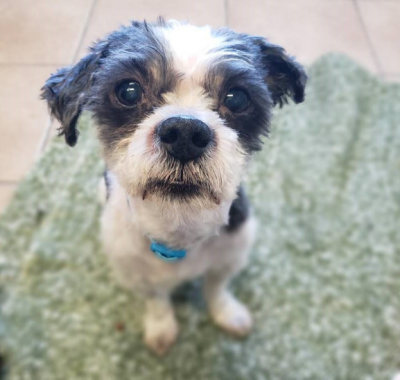
Biscuit – Today!

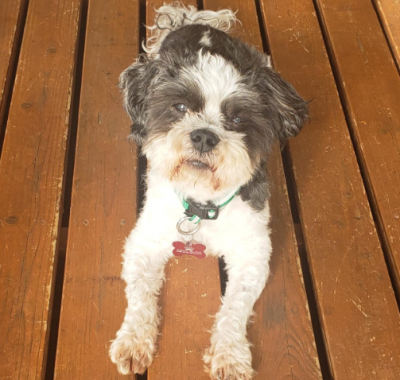
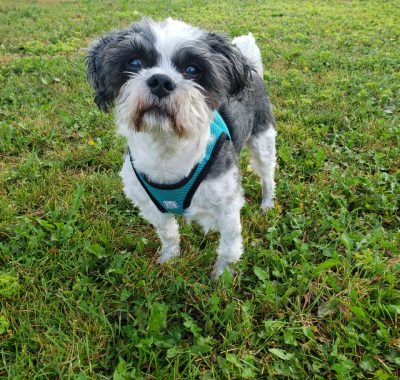
Biscuit had to make some adjustments to his new home.  “He wasn’t house-trained, so we’re working on this.  He’s almost completely there,” stated Jessica. “Biscuit loved our kids from the get-go but was quite timid with my husband at first.  He’s still somewhat hand-shy.”  Biscuit gets along great with the family’s two cats.  “One of our cats enjoys trying to cuddle with him every chance she gets.” Biscuit has blossomed so much with his new family.  “His favorite activities include days at the beach and long car drives,” Jessica related. “He recently learned how to swim and got the biggest smile on his face as if to say ‘Hey mom, look what I can do!’” Biscuit and his foster mom stop by the SPCA Hospital for frequent check-ups to make sure he continues to thrive. “He’s a great patient and always loves his visits with Dr. Benjamin,” said Jessica.

Jessica encourages people to consider opening their hearts and home to a palliative care animal in need. “It’s one of the most rewarding things you can do,” she said.  “We feel so humbled to be able to give this little guy a second chance at the loving home he deserved in the first place. We may have met him late in his life, but we will make it his best life while he is here.”

Please give a round of ‘ap-paws’ to the Nova Scotia SPCA Palliative Care Program.  Your generous support gives lucky dogs like Biscuit a second chance at a happy life.  To learn more about this life-changing program and how you can help, click here.

Judy Layne

Judy is a dedicated volunteer with the Nova Scotia SPCA and proud adoptive fur-mama to Gracie. She is committed to speaking for animals who cannot speak for themselves.

Paws Off Our Claws

By Judy Layne

March 15, 2018, was a happy and historic day for cats in Nova Scotia.  That’s when we officially became the first province or state in North America to ban elective, medically unnecessary cat declawing.  The Nova Scotia SPCA, along with other animal welfare groups, had advocated ending the practice and were thrilled to see a ban imposed.

The Canadian Veterinary Medical Association states that declawing causes unnecessary and avoidable pain.  The term ‘declawing’ is actually a misnomer since it implies that the procedure simply removes a cat’s claws.  In fact, declawing involves amputating the bones in a cat’s paws.  The procedure is the equivalent of amputating a person’s fingers down to the last knuckle joint!  Recent studies show that declawing can cause long-term adverse health impacts including arthritis, pain in paws and limbs, and back problems.

So, will declawing ever be performed? In very rare cases of infection or trauma, the removal of a claw or claws may be medically necessary and be in the cat’s best interests.

The Canadian Veterinary Medical Association points out that scratching is a natural and necessary behavior that cats use to mark territory, help with balance, climb and defend themselves.  In the past, some pet owners rationalized getting their cats declawed to prevent scratches to furniture, people or other pets.  However, there are some more humane alternatives.  Try these:

  • Trimming your cat’s nails regularly
  • Nail caps
  • Providing them with several scratching posts
  • Lots of positive reinforcement

Here at the Nova Scotia SPCA, we have seen no increase in surrenders for destructive scratching behaviours since the NSVMA implemented the ban.  Furthermore, according to the National Council on Pet Population Study and Policy, the destruction of household objects does not even make the top 10 list of reasons why cats are relinquished to shelters.

Declawing has already been banned in Europe, the U.K., Australia and several U.S. cities.  There have also been calls in other Canadian provinces to ban the practice.  Now that Nova Scotia is leading the way, it should be easier for other jurisdictions to ban declawing.

The province was able to assume this leadership role thanks first to the courage of the Nova Scotia Veterinary Medical Association (NSVMA) who amended its code of ethics to prevent vets from declawing cats.  Second, we need to applaud the Nova Scotia government, who passed landmark legislation that makes cat declawing illegal across the province for both animal guardians and veterinarians.  Those who declaw a cat for cosmetic reasons now face up to six months in jail and a $25,000 fine for a first offense.

Let’s celebrate this important step forward in Nova Scotia animal welfare.  It truly is “the cat’s meow”!

Judy Layne

Judy is a dedicated volunteer with the Nova Scotia SPCA and proud adoptive fur-mama to Gracie. She is committed to speaking for animals who cannot speak for themselves.

Legacy of Love

By Taylor Mundy

We all have a story to tell and a legacy to leave.  SPCA Champions, Lorey and Brent Brown, will forever be remembered as heroes.

100% of sales donated to the SPCA!

Two years ago, Lorey and Brent began fostering SPCA kitties.  Their first experience was with Lillie, a kitty who was rescued from a hoarding situation.  Because of their patience, kindness, and dedication, Lillie made dramatic improvements and began thriving.  “It’s the best feeling in the world when an animal that’s been through so much starts to trust you,” says Lorey, explaining how rewarding fostering SPCA kitties has been.

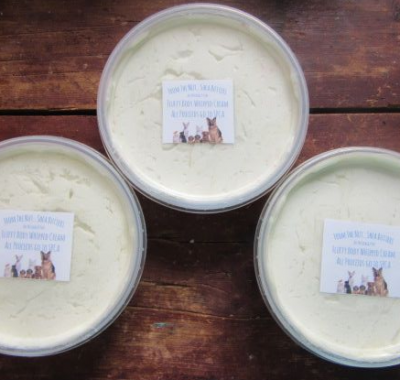
Lorey and Brent quickly realized that the Nova Scotia SPCA desperately need financial support to continue to serve animals in need.  Antibiotics, surgeries and emergency medical treatment is expensive… especially for a charity with no government funding for their shelters.  On numerous occasions, Lorey has kindly donated proceeds from her all-natural skincare line, From the Nut Shea Butters.

Brent and Lorey – SPCA Best Friends for Life!

Recently, Lorey and Brent have decided to take their love for animals even further and generously included the Nova Scotia SPCA in their will.  “Animals cannot speak for themselves.  They need us!” says Lorey.  By leaving a meaningful gift for the Nova Scotia SPCA in their will, they will continue to transform the lives of local animals.  Their legacy of love will help provide life-saving veterinary care, stress-free sheltering, and endless love and affection.

Lorey and Brent have expressed, “Everyone at the SPCA has such a special heart!”  This is exactly how we feel about our generous supporters, like you!  In as little as one sentence in your will, you can provide a brighter future for abandoned, injured and abused pets.  In fact, because of the unique tax advantages, it can also help save you and your family money.

Pets give you unconditional love… and you have the powerful opportunity to make your love unconditional too.  Thank you for your everlasting commitment to local animals in need, Lorey and Brent!

Interested in learning more about how to become a Best Friend for Life?  Connect with us today by e-mail or by calling 1-844-835-4798 ext 229

Taylor Mundy

Taylor is the Communications & Development Officer with the Nova Scotia SPCA and proud adoptive fur-mama to Bonnie. She is passionate about raising awareness and funds for local animals in need.

The Miracle of Microchips

By Judy Layne

Do you believe in miracles?  Ron Murray and Tammy MacLeod do.  And they owe their miracle to a tiny microchip that brought Peanut Butter the kitty back home after being lost for over 3 months.  Read about their joyful reunion and why it’s so important to microchip your pet.

On May 20th, Ron’s back door was accidentally left open a crack and precious Peanut Butter disappeared in the blink of an eye.  “It was late at night and I don’t know how he scooted out the door so fast,” said Ron.  “I raced outside calling his name, but he was nowhere to be found.  I went through the neighborhood and asked people to be on the lookout for Peanut Butter.  I was so worried

“When he wasn’t back in a few days, I really started to worry.  I blasted Facebook and posted on Lost Cat groups.  I called the Nova Scotia SPCA and Animal Control to see if he’d been turned in.”  Ron and Tammy spent hours searching for Peanut Butter.  Anytime someone would post that they saw an orange kitty roaming, Ron would race there to see if it was his sweet Peanut Butter.  While the prospect of finding Peanut Butter was fading, he never gave up.

On August 10th, a kind-hearted SPCA volunteer found a thin matted ball of fur roaming the streets and brought him to safety at the SPCA Dartmouth Shelter.  When shelter staff scanned the cat, they hit the jackpot.  There was a registered microchip with a name and phone number.  It was Peanut Butter!

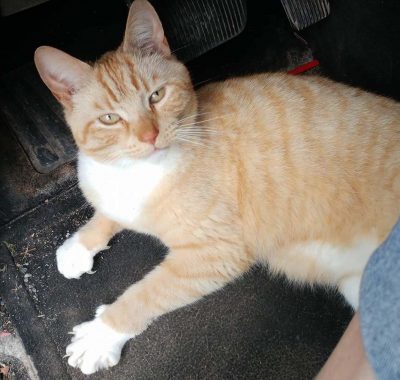
“When the SPCA called to say Peanut Butter had been found, we couldn’t have been more excited,” says Tammy.  Ron adds, “He lost a lot of weight and has a cut on his lip.  I’m nursing him back to health and keeping him close.  It’s a miracle that was only possible because Peanut Butter was microchipped.”

Tammy agrees that getting Peanut Butter microchipped was one of the best decisions she has ever made – “The vet had suggested Peanut Butter be microchipped when he got fixed.  It’s amazing that a decision that I made years ago helped Peanut Butter go from lost to found.

WHY MICROCHIPS MATTER

If you haven’t microchipped your furry family member yet, consider this:

  • 1 out of 3 family pets will get lost
  • microchipped dogs are more than twice as likely to be returned to their families
  • microchipped cats are more than 20 times as likely to be returned to their families

A microchip gives your lost pet the best chance of being returned home safely.  The biggest reason why missing pets aren’t returned home is they’ve lost their collars or their ID tags have become unreadable due to time and wear.  A digital microchip lasts 25 years and eliminates this possibility.

It’s a one-time inexpensive purchase.  This one-time cost can save you from unimaginable heartbreak if your pet goes missing.  All pets adopted through the Nova Scotia SPCA are microchipped already and registered with 24 Pet Watch.  Plus, thanks to our friends at PetSmart Charities of Canada, pets who have subsidized spay/neuter surgeries booked at SPCA Hospitals and Clinics receive a complimentary microchip!

Implanting a microchip is quick and painless.  A microchip is about the size of a grain of rice. It’s like getting a vaccination.

A microchip only works if you register your pet’s microchip number and if you keep your contact information up-to-date on the registration site.  August 15 is national Check the Chip Day – a great time to:

  • ensure that your pet’s microchip information is registered, and your contact info is current.  Not sure who your pet is registered with?  Simple!  Ask your vet to scan and check at your next exam.
  • get your pet microchipped!

Although microchips are small, they can make a big difference by reuniting pets with their families.

Judy Layne

Judy is a dedicated volunteer with the Nova Scotia SPCA and proud adoptive fur-mama to Gracie. She is committed to speaking for animals who cannot speak for themselves.