
7 Reasons to Volunteer at the Nova Scotia SPCA

By Taylor Mundy

We are overjoyed to hear that we won the Coast’s “Best Place to Volunteer” for 2018! We depend on the enthusiasm, generosity and skills of our amazing volunteers.  To date, we have over 500 volunteers that help with animal care, fostering, fundraising, TNR, and supporting our SPCA thrift stores… and we are always looking for more volunteers!  If you need a reason to lend a helping hand, we’ve got 7 of them right here:

#1 – MAKE A DIFFERENCE

This year over 6,000 animals have been re-homed throughout the province!  Where we do not receive any government funding to care for our SPCA shelter pets, community support is critical to our future.  By volunteering with us, you are providing the means to help rescue, rehabilitate and rehome animals in need.

Some volunteer activities (like scooping poop) are not very glamorous… but they are rewarding.  Every animal that comes to us has a story.  Some are heart-breaking, some are captivating, and some are inspiring.  Shelter pets have a lot of love to give and appreciate the little things… we can learn a lot from that.

#2 – NEW OPPORTUNITIES

Volunteers can find their niche because we have so many ways to help.  Fostering and volunteering with shelter pets at your local shelter is not the only way to get involved!  We also need people to help us manage the feral cat population with our trap-neuter-return program!

In addition, if you are passionate about retail and fundraising, you can volunteer at any of our 4 thrift stores across the province. Our SPCA Thrift Stores have brought in over $300,000 since opening, and all of this comes straight back to helping SPCA furry friends in need!

Whether it is by bottle-feeding orphaned kittens, sorting donated items at our thrift stores, or raising funds and awareness, our volunteers are furever making a difference!

#3 – WARM FUZZIES
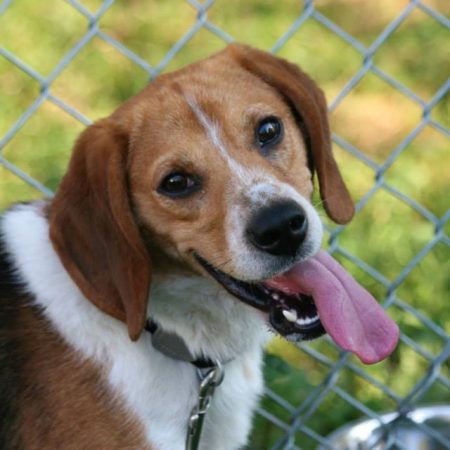
Want a smile as big as this guy’s smile?  Volunteer!  It’s a proven de-stressor that enhances your lifestyle and emotional well-being.  You’ll be contributing to the solution!  You can change your life and give shelter pets a second chance at a happy life – WIN, WIN!

#4 – MEET NEW FRIENDS

The caring people around you are all here for the same reason: a genuine love of animals.  You’ll be able to regularly see and bond with other volunteers through your common interest of helping animals.  It’s inevitable that you’ll develop long-lasting friendships and networking opportunities.   

#5 – GAIN EXPERIENCE

With all our volunteer opportunities, we ensure that you are properly trained so you feel comfortable and confident.  You’ll be able to learn and explore your interests and passions.  It can also provide an opportunity to build upon skills you already have and use them to benefit animals in need.

#6 – WE NEED YOU

The Nova Scotia SPCA simply could not function without the help of our fantastic volunteers.  Words alone cannot express how much we appreciate our volunteers for their kindness and compassion.

We are always looking to connect with more passionate volunteers.  Come see for yourself how rewarding it is and why we’ve been voted as “Best Place to Volunteer” for 5 years in a row!  Simply fill out an application at your closest SPCA Animal Shelter or our online application here.

#7 – SWEET SNUGGLES

No explanation necessary.
Taylor Mundy

Taylor is the Communications & Development Officer with the Nova Scotia SPCA and proud adoptive fur-mama to Bonnie. She is passionate about raising awareness and funds for local animals in need.

The Joy of Adopting an Older Pet

By Judy Layne

Welcoming an older pet into your home is a heartwarming and rewarding experience.  Just ask Jenn Purdy.  In April, her family adopted a senior dog from the Nova Scotia SPCA named Beau.  Roguishly handsome and charming, Beau was aptly named.

Purdy wasn’t looking to adopt a pet when she visited the SPCA shelter; she was there as a volunteer dog walker.  She saw Beau’s picture on the wall and was drawn to his big smile.  “I was impressed with his wonderful calm demeanor and how well he behaved on his walk,” says Purdy.  “When I learned he was compatible with younger children, I knew I had to take this fellow home.”  

Beau’s age was estimated between 5 and 7 years and Purdy considered this a plus. They previously adopted two older dogs and knew that senior pets offer many advantages. Unlike puppies who will go through developmental changes, “they’re fully matured with established temperaments, so you’ll know if they’re a good fit for your family” relates Purdy. Also, “there’s no complaints about skipping the chewing, up-all-night phase and housebreaking associated with young dogs.”

Like other senior pets who have learned what it takes to get along with others and become part of a pack,  Beau promptly settled into his new home.  “He found his bed, new toys and favorite spots very quickly,” says Purdy.  “The kids loved him right away and he took to them immediately too.  His first family photo looks like he’s been here forever.” 

While senior pets still need regular exercise and playtime, they’re not as high-energy as younger pets and are often content taking it easy.  Beau, for instance, loves swimming and walking the Sackville Lake Trails.  He also enjoys cuddling and “is a 50 pound lap dog”, states Purdy.  

Who says you can’t teach an older dog new tricks?  Senior dogs are just as smart as younger ones. In fact, they’re easier to train because they’re calmer and have a greater attention span.  Beau is a prime example of a clever canine.  “He quickly mastered shake a paw, lie down, sit and stay,” reports Purdy.  “We enrolled Beau in beginner training classes to deepen the bond between us.”  When the instructor recognized how smart Beau was, she suggested moving to the advanced class where Beau readily grasped complicated commands. “Beau loves practicing with everyone in the house and is eager to please.”

Beau so impressed his trainers they suggested he could make a great therapy dog.  Through Therapeutic Paws of Canada, Purdy and Beau volunteer at a facility serving residents with disabilities.  Beau adores ‘going to work’ with his mom.  “When I take his official kerchief out of the closet, he gets super excited and can’t wait to go.” How fitting that a dog whose own story has a happy ending goes on to make others happy.

When you look into the wise worldly eyes of a rescued senior pet, you’ll see an animal who understands and appreciates that they’ve been given a second chance at happiness. Purdy sums it up succinctly.  “Older animals deserve a life filled with love.”  Please consider opening your heart and home to a senior pet.  You’ll be rewarded with a love as unconditional as it is enduring.  

Judy Layne

Judy is a dedicated volunteer with the Nova Scotia SPCA and proud adoptive fur-mama to Gracie. She is committed to speaking for animals who cannot speak for themselves.

Tribute: Unsung Heroes in Animal Rescue

By Judy Layne

They wear their uniforms with pride.  To them, their work isn’t just a job – it’s a calling.  They are Nova Scotia SPCA Cruelty Investigation Officers and they are true heroes.

Every day, they see things no one wants to see. Dogs who have lived their entire lives on a 4-foot chain.  Never touched by caring hands.  Never hearing the words ‘Good boy’. Never able to run or play.  Never able to escape the neglect and abuse. Cats abandoned and left alone in a deserted apartment.  Kittens callously taped into cardboard boxes and put in a dumpster.  No matter how many times they witness the aftermath of neglect and cruelty, there are some things they never get used to. The painful images they see are inevitably burned into their memories.  

Although they try to build walls to protect their hearts, emotional wounds are unavoidable.  But their passion is stronger than their heartache.  Resilience becomes a huge part of their characters. They draw upon their dedication and love for animals to rescue those with broken bodies and spirits.  They know that they must take compassion and turn it into action on behalf of the animals who need them. 

At times, they question their own strength but somehow, they carry on. They are revitalized when they think of each rescued animal’s journey, knowing how far they’ve come. For all the pain, there is joy when they see the animals they rescued learn to trust, feel loved for the first time and begin to bloom. And when perfect ‘forever’ homes are found for them, it makes it all worthwhile.  It’s a reminder of why they do what they do.  For the animals they save, these men and women are the pathway to a new life…..the bridge between what was and what can be.  

Last year alone, NS SPCA cruelty officers investigated 1615 cruelty complaints and intervened on behalf of 4462 animals. But these heroes need your help to continue making a life-changing difference for neglected and abused animals.  Animals have no voice to cry out for help, so it’s up to us to speak for them. If you suspect or witness an act of animal cruelty or even if you’re unsure, please call the SPCA immediately (toll-free: 1-888-703-7722; local 902-835-4798).  All calls are confidential.  You can also file a confidential online complaint. Never take matters into your own hands.  

Albert Einstein once said ‘The world is a dangerous place, not because of those who do evil, but because of those who look on and do nothing.’  The worst thing you can do if you witness or suspect animal cruelty is turn away.

You can be a hero too – if you see something, say something.

Judy Layne

Judy is a dedicated volunteer with the Nova Scotia SPCA and proud adoptive fur-mama to Gracie. She is committed to speaking for animals who cannot speak for themselves.

Halloween DIY Costume

By Courtney Barber

OCTOBER IS HERE! That means Halloween is just around the corner and it’s time for all goblins and gools to suit up and trick-or-treat around the neighbourhood. 

If you’re like me, you’re hoping for a unique one-of-a-kind costume that catches the eye and makes you look like a total Halloween superstar, and our SPCA Thrift Stores can be your number stop for all things Halloween DIY. Check out our list of store locations and hours!

Here are some tips and tricks to have a Spooktacular Halloween and rock the trick-or-treating or house party circuit this year! I’ll tell you how I thrifted my way into not just one costume by FOUR all for the low price of $12.75. 

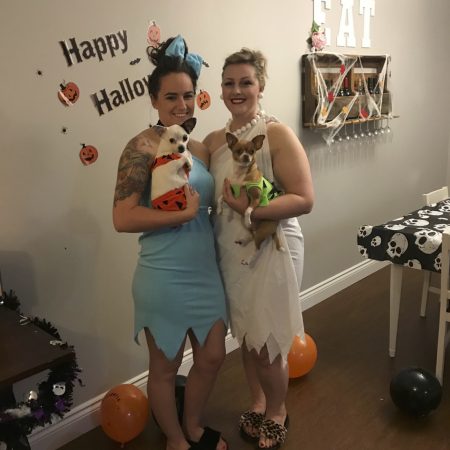
My little family of 4 (two humans, two dogs) hosts an annual Halloween party, costumes are a requirement and including the pooches is a must! We thrifted our way into becoming the Flintstones. First up, a visit to the Dartmouth SPCA Thrift store to snag some supplies: 

  • One plain white bed sheet – $2.00
  • A plain blue blanket and/or sheet – $3.00
  • Foam craft balls – .75 
  • Two pieces of black felt – .50  
  • Old t-shirt (1 green, 1 orange) – $6.00 ($3/shirt)
  • Black pipe cleaners – .50

Grand Total: $12.75

Now I am no seamstress – but if you are, BONUS! I used some good old hot glue, safety pins and handstitched some small items. 

Wilma Costume

  • Ever been to a toga party? Now is the time to put those skills to use! Simply take your white bed sheet and wrap it around your body to create a single shoulder ‘toga’. Securely fasten the shoulder with a knot. Take those foam balls, a needle and thread and start to poke through each of the foam balls to create your necklace! Get help tying a toga
  • Once the toga is tied, time to shorten it and give it that classic Wilma look. Cut to approx. the knee and cut triangles into the fabric until you’re happy with the look and length

Betty Costume

  • Similar to the Wilma costume, grab your blue blanket or sheet, and fold in half across your body (the same way you would a towel across your body). From here I did some pretty primitive stitching from top to bottom, until the fabric was as tight as I liked. Then shortened the bottom and cut diagonally just like the Wilma costume.
  • For Betty’s Bow, I used the excess fabric to create this and my trusty glue gun! 

Dog Costumes (Bam Bam and Pebbles)

TADA!

There you have it, four simple but great Halloween costumes all made for under $13.00 AND by purchasing all these items at the SPCA thrift Store, we helped save the lives of some furry friends too! 

Courtney Barber

Courtney is the Director of Marketing & Graphic Design for the Nova Scotia SPCA.

12 Things Only Cat Parents Understand

By Judy Layne

Anyone who has the privilege of being a cat parent knows how special the relationship is. Cats know the way to our heart and there’s no sound on earth better than their purr. They have a remarkable talent to be endearing and exasperating at the same time (it’s called ‘catitude’). And while every kitty has a unique personality, they all share the ability to make us laugh with their wacky ways. If you’re a cat parent, I know you’ll relate to these feline factoids.

  1. Your cat is the boss. It’s no use pretending; just accept it. Two feline favorite principles: ‘Dogs have family; cats have staff’; ‘Cats rule, dogs drool.’
  2. You can’t fight cat hair. After trying lint rollers, special vacuum attachments and avoiding dark clothing, you know it’s not worth the effort. Just buy a t-shirt that reads ‘Cat Hair, Don’t Care’.
  3. The box it comes in is much more fascinating that the toy itself. No matter how expensive the toy or how long you spent finding it, cats will go for the box every time.
  4. Cats have no sense of personal space. Who would think that having a cat butt in your face is a good thing? Relax, it means they like you. And close-up sneezes? A speciality.
  5. Decision-making isn’t a feline forte. Scratch, scratch – ‘I want in’. Three minutes later – scratch, scratch –‘ I want out’. Sound familiar? As soon as you close a door, they want to be on the other side of it.
  6. Cats love experimenting with gravity. Forget your decorating dreams. Kitties love knocking any item off any surface in your home.
  7. A scratching post just can’t compare to an expensive sofa. On the plus side, you’ll find long-lost belongings when you move the couch.
  8. Cats are finnicky eaters. They want to try whatever you’re eating, even if they don’t like it. And if they find out you just bought a case of their favorite canned food? Now they can’t like that brand any more.
  9. Cats have no sense of privacy. They will insist on following you into the toilet. In a cat’s ideal world, no human would have to pee alone. And don’t forget to hide the toilet paper from kitty, or risk getting stranded without any.
  10. Cats are morning types – very early morning types. You don’t need an alarm clock anymore. Your personal wake-up call arrives promptly at 5am every day, including weekends. Cats are content to sleep 23 hours a day, except from 5 to 6am when it’s the perfect time to run around the house at full speed making as much noise as possible.
  11. Your laptop is actually a kitty seat warmer. Good luck convincing them otherwise. Trying to study or read the paper? Cats will offer to help you by sitting on whatever you’re doing.
  12. Cats like to keep us guessing. Your cat shows you their tummy. It’s either ‘Sure, I’d love a belly rub’ or ‘Make one false move and I’ll bite your hand off.’ Hey, you’ve got a 50-50 shot at being right.

So would we ever change a single thing about these mysterious, magical mischievous creatures?  Never.

Judy Layne

Judy is a dedicated volunteer with the Nova Scotia SPCA and proud adoptive fur-mama to Gracie. She is committed to speaking for animals who cannot speak for themselves.

No Judgement Zone: Surrendering Your Pet

By Judy Layne

Sometimes, life teaches you important lessons when you least expect it.  It happened to me yesterday. Reading a magazine, I came across a heartfelt story written by a lady named Sarah who surrendered her pet.  It moved me deeply and made me reflect on my feelings about people who give up their pets.  

Reasons Why People Surrender Their Pet

I’ve always had strong opinions about the care animals deserve. Like others who love their pets and consider them family members, the notion of surrendering our fur-babies seems unfathomable to me.  Having said that, my heart goes out to people who must give up their pet for reasons beyond their control – losing their home or job, debilitating illness, moving into a care home, passing away.  At the opposite end of the spectrum are those who consider their pets disposable.  Some decide they don’t want the responsibility any longer; others surrender their pet for ‘not being as playful and cute anymore’.  I will always think this is callous and irresponsible.  

But what about the people in between?  While it’s easy to automatically assume that someone who surrenders their pet is an uncaring person, the lesson Sarah’s story taught is that we shouldn’t judge because we don’t know the circumstances behind why someone surrendered their pet.  Imagine how sad and painful it must be for people forced to give up their beloved pet if they don’t have any other choice.  Enter Sarah. 

Sarah’s Heartbreaking Story of Surrender

Sarah said she never thought she’d be the ‘kind of person’ who’d surrender a pet.  Yet she found herself doing so. Leaving the animal shelter without her beloved cat Max, Sarah stated she was devastatedfilled with guilt and grief.  She explained that the decision was the most difficult thing she’d ever had to do. 

Max was Sarah’s first cat, a rescue.  Over the years, she married, adopted another kitty and a dog, then had a baby.  With each change, they worked hard to help their pets adjust.  But the baby’s presence seemed to push Max beyond changes he could cope with.  Max began lunging at the dog, lashing out at Sarah and her husband, hissing at the baby.  He was plainly over-stressed and it was painful for them to see.  They read articles, gave Max more attention, ensured he had a ‘safe’ room and consulted their vet.  Nothing worked. Sarah felt guilty about rescuing Max and then creating a setting that was too stressful for him.  No family members, coworkers or friends could take Max, so they made the painful decision to surrender him, hopeful he’d find a home with a family that loved him as much as they did.       

What Sarah Learned

Here’s the profound part.  Sarah said that while they waited for paperwork to be completed, a family entered the shelter to surrender a dog that barked constantly.  Sarah admitted she’d unconsciously judged the family, assuming they never bothered to train the dog and then decided he was too irritating.  But Sarah caught herself, ashamed to have judged these people so quickly with no idea of what they had gone through or why they believed they had to make this decision.  Sarah recognized that other people at the shelter could make a similarly unwarranted and baseless judgement about them.  She wanted to shout that they tried so hard to make things work and did everything they knew how to do. 

The Lesson for All of Us

Sarah’s story reminded me to embrace compassion and not leap to judgement about people who surrender their pet.  I hope it inspires you to do the same.  

If you or someone you know is struggling with the decision to surrender a pet, please contact the Nova Scotia SPCA for guidance.

Judy Layne

Judy is a dedicated volunteer with the Nova Scotia SPCA and proud adoptive fur-mama to Gracie. She is committed to speaking for animals who cannot speak for themselves.