We Remember – Honouring Animals Lost in War

By Judy Layne

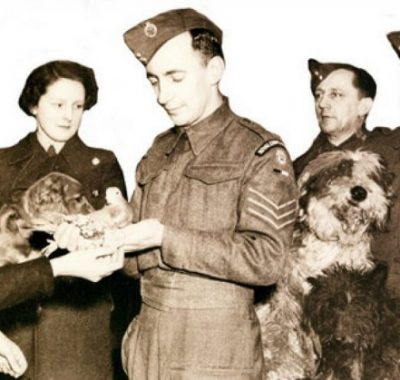
On November 11th the Nova Scotia SPCA joined fellow Canadians to remember and honour the soldiers who fought and died for our freedom.  We also paid tribute to the millions of animals that lost their lives in war. “We want to formally honour the bravery and service of animals in wartime,” says Nova Scotia SPCA CEO Elizabeth Murphy.  “As we reflect on the sacrifices of our veterans, we will also remember the unwavering courage of animals that have stood by our veterans’ sides in times of war.”

At the national and international level, steps have been taken to officially commemorate the wartime contributions of animals.  In London, the Animals in War Memorial officially opened in 2004.  In 2012, the Animals in War Dedication was unveiled in Ottawa to honour animals who faithfully served alongside their human comrades.  A wreath in their honour was laid during the Remembrance Day Ceremony in Ottawa.  The Nova Scotia SPCA also laid a wreath in memory of the animals during Halifax Regional Municipality’s Remembrance Day Ceremony.

A wide range of furred and feathered heroes have served in times of war.

  • Dogs have followed humans into war for centuries and still see active service today.  They have played a significant role in scouting, tracking, rescuing soldiers and civilians, delivering messages, and in detecting dangerous gases, explosives, and land mines.  Wearing specially made gas masks, dogs were even used by the Red Cross to help deliver medical supplies.
  • Horses and mules have been used in almost every land battle up to the 20th century.  Horses transported soldiers, ammunition, and supplies into combat. Mules were often used as stretcher-bearers, carrying wounded soldiers to safety.
  • Carrier pigeons were an integral component of all armies.  Before advancements in communication, they were used to deliver critical messages.  An estimated 100,000 messenger pigeons served during World War I and over 200,000 during World War II.  They flew through difficult weather conditions and direct gunfire to deliver life-saving information.
  • Canaries were used as an early warning system to detect incoming gas and chemical attacks.
  • Cats kept mice and rats from infesting warships, saving dwindling food rations and preventing disease.
  • Animals have also accompanied military units as pets and mascots, providing comfort and companionship and helping to boost morale among troops.
  • Even animals as small as glow-worms have been used in war, as they emit soft light that allowed soldiers to see maps and messages in the dark without alerting the enemy.

The animals of war had to persevere through terrible conditions – machine gun fire, bombs exploding, and exposure to gas and other chemicals.  They were subjected to freezing temperatures in the Arctic and blazing heat in the desert.  War animals endured hunger, thirst, exhaustion, as well as disease. Despite being wounded, many animals continued their work with amazing dedication, courage, and loyalty to their human comrades.

It is estimated that a staggering 9 million animals lost their lives serving in World War alone.  No one knows the true number of human lives that were saved by these animals. 

Individual animals have been honoured for their wartime service. The Dickin Medal, considered the animal version of the Victoria Cross, was introduced in 1943 to recognize outstanding acts of animal bravery and devotion to duty. The medal has been awarded 71 times across the world. The recipients include 34 dogs, 32 pigeons, 4 horses, and 1 cat. Read about the 3 Canadian animal heroes that received the Dickin Medal below.
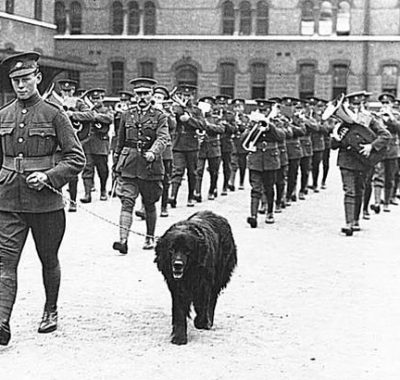
Sergeant Gander: This beautiful Newfoundland dog was honored in 2000 for his bravery, saving many Canadian soldiers during the Battle of Hong Kong in World War II.  On two documented occasions, Gander’s attacks halted the enemy’s advance and protected groups of wounded soldiers.  In a final act of bravery, Gander was killed in action gathering a grenade.  Without Gander’s intervention, many more lives would have been lost.
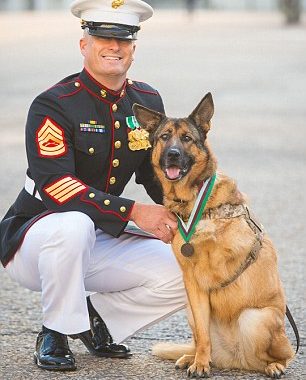
Sam: This amazing German Shepherd was honored in 1998 for his outstanding gallantry while serving with the peacekeeping force’s Canadian Regiment in Bosnia-Herzegovina in April of that year. On two documented occasions, Sam displayed great courage and devotion to duty.  He successfully brought down an armed man threatening the lives of civilians and soldiers. And while guarding a compound harbouring Serbian refugees, Sam held off rioters until reinforcements arrived. Sam’s valour saved the lives of many soldiers and civilians.
Beachcomber: This remarkable carrier pigeon was honoured in 1944.  He arrived in Britain in August 1942 from Dieppe France, flying through hazardous conditions.  Beachcomber carried a message from the Canadian army alerting commanders of their landing there, marking the start of the Dieppe Raid.


I came across a moving quotation from a Vietnam veteran – “I have often thought that worse than dying in a war is to be forgotten.”  On November 11th, and every day, please remember our fallen human and animal heroes.
 

Judy Layne

Judy is a dedicated volunteer with the Nova Scotia SPCA. She is committed to speaking for animals who cannot speak for themselves.
Black Cats are Pawsome

By Taylor Mundy

There is definitely a superstition related to the black cat.  Some people think they’re bad luck if they cross your path.  However, black cats are simply pawsome, friendly pets that make great furry best friends.  Check out our compilation of why we love black kitties.
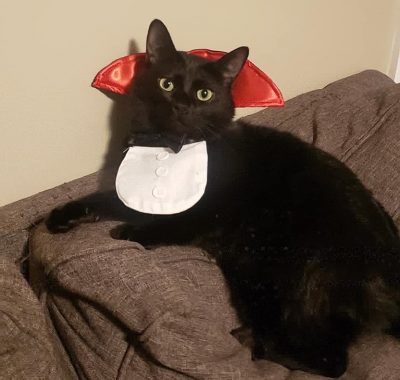
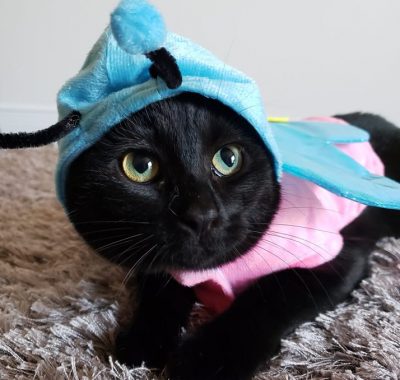
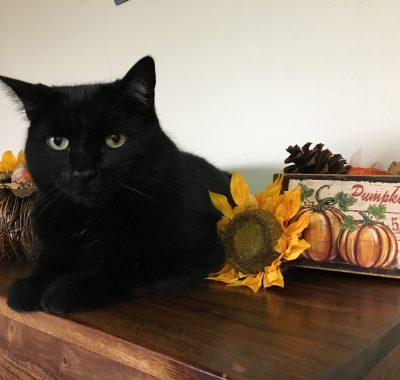
Black cats are Halloween icons

But they are so much more than spooktacular costumes


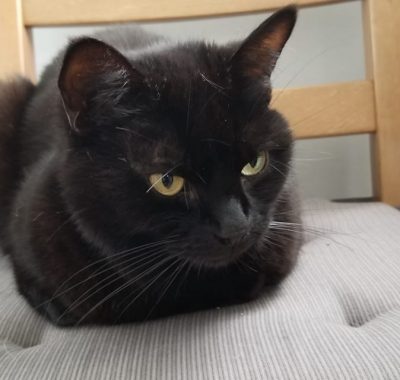
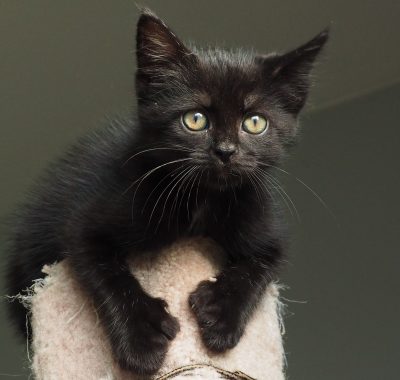
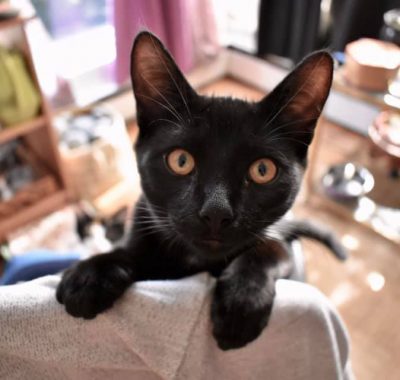
Black cats are beautiful…
and humble

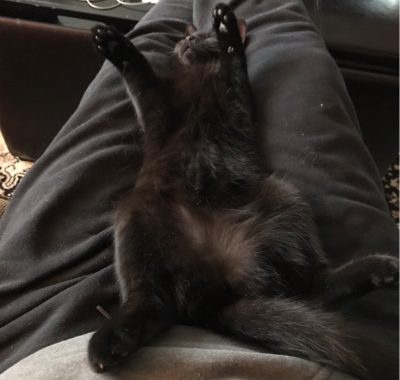
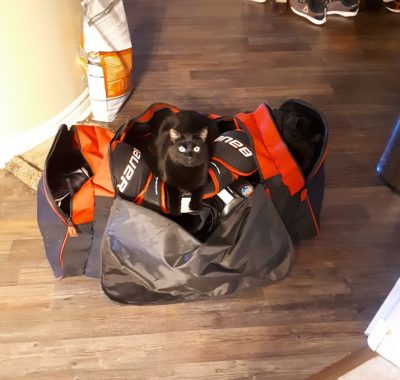
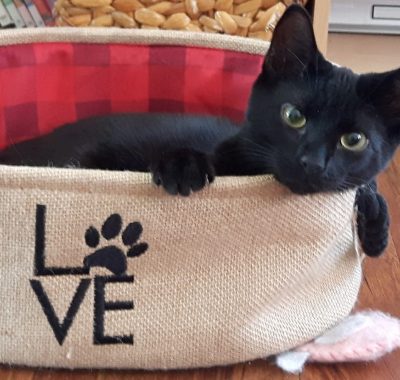
They can sleep almost anywhere

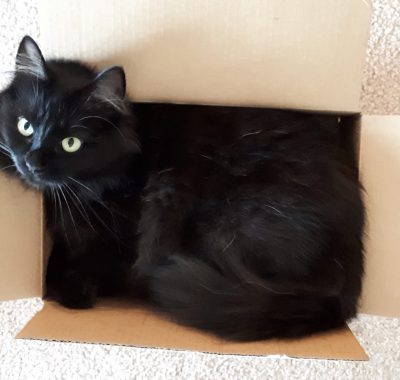
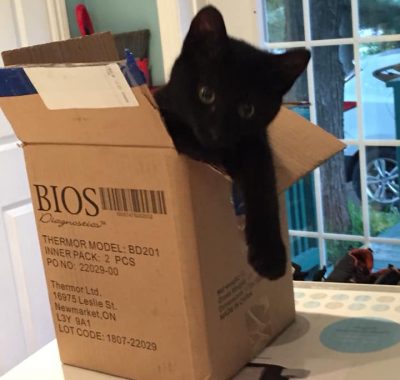
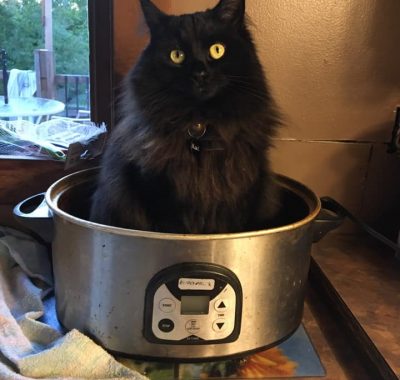
And they pride themselves into fitting into every sized box

Anytime, anywhere

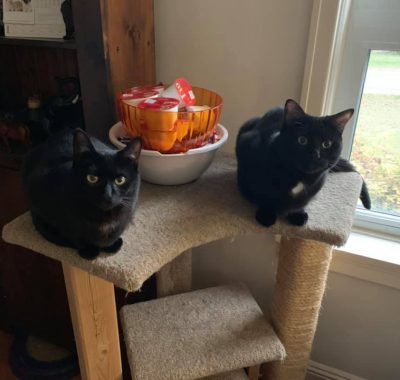
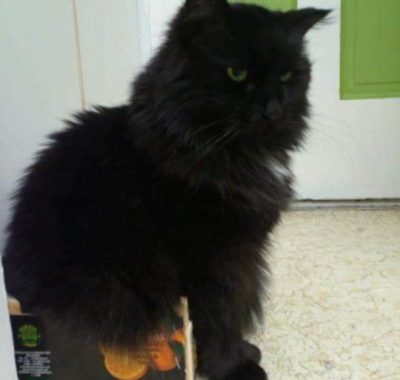
Even clementine boxes!

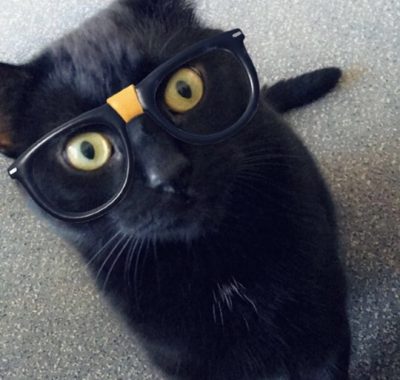
Black cats are super smart

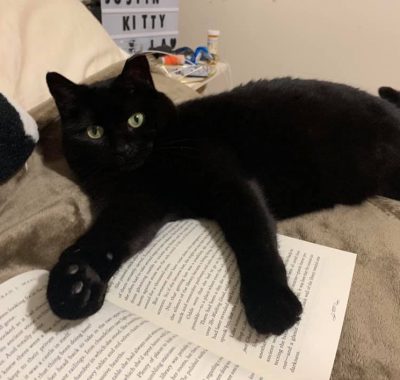
And will help you study so you can get on their level

Sometimes black cats will sprinkle kitty hair in your food to add love

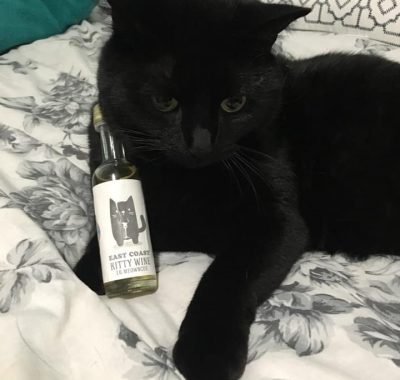
They may even share their catnip wine

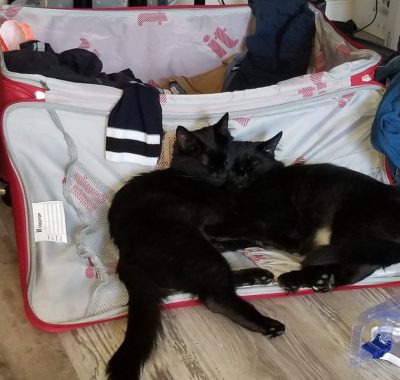
Black cats will help you pack for adventures (with the promise you’ll bring home kitty souvenir toys)

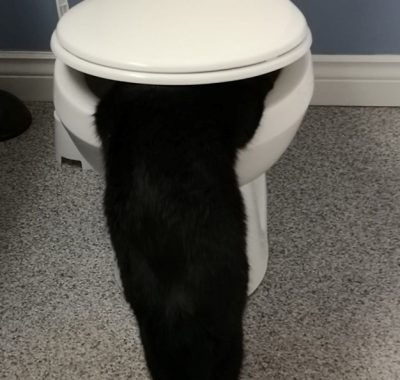
And take care of household chores like cleaning the bathroom while you’re away

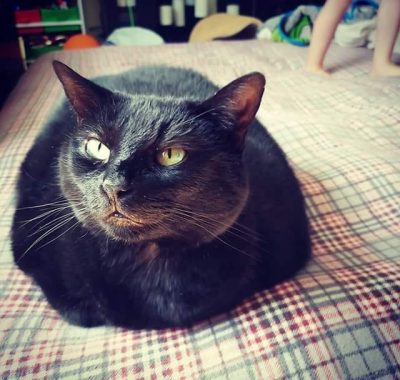
They make excellent loaves of bread

Like wow!

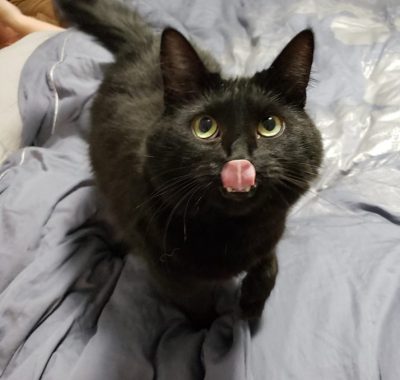
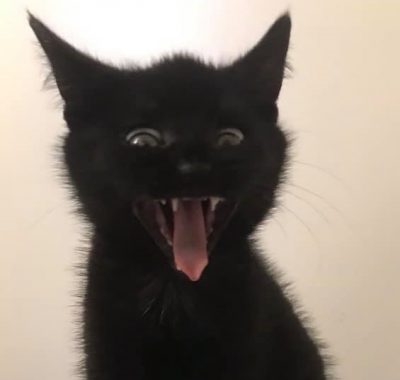
But sometimes they forget to put their tongue back in their mouths – blep

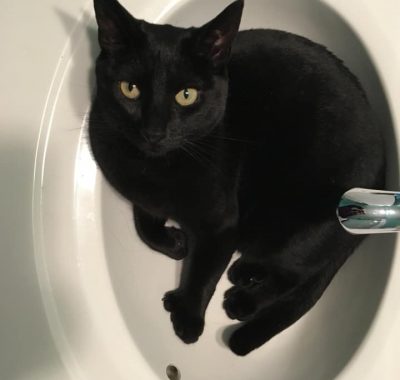
Black cats all love sinks.  Every single one of them!

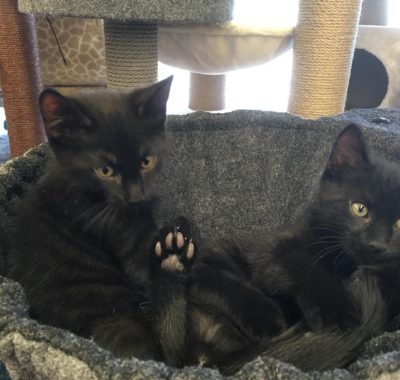
And have super cute toe beans

Some even have extra toes!

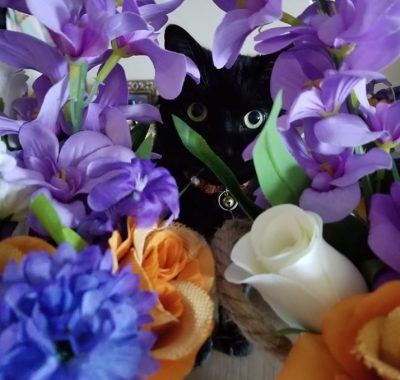
They match any home décor

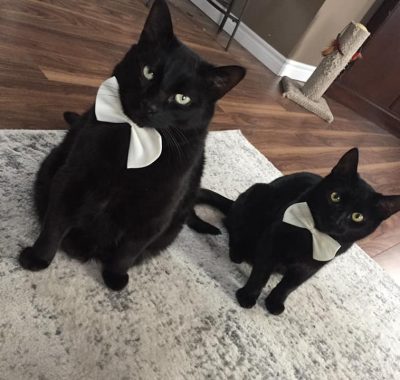
And are always ready for a formal occasion

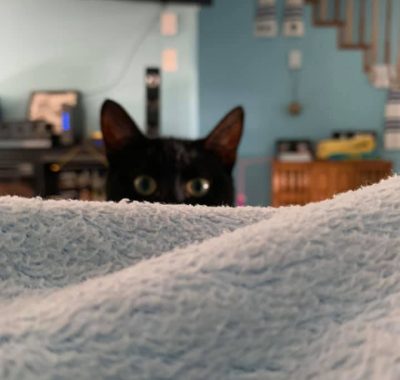
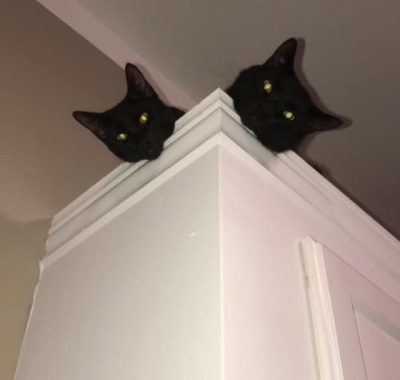
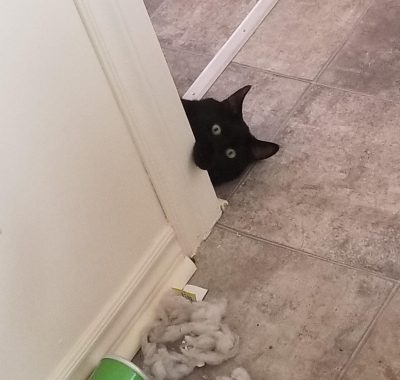
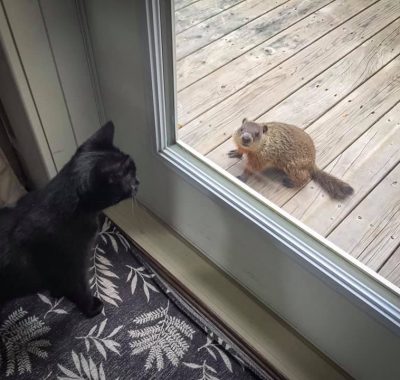
They are great at hide-and-seek

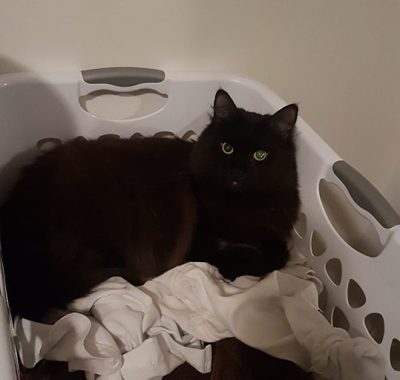
But not so great at helping with the laundry

Black cats are like magic!  They instantly make you feel better

They cheer you up

Support your hobbies and interests

Alert you of anything “new”

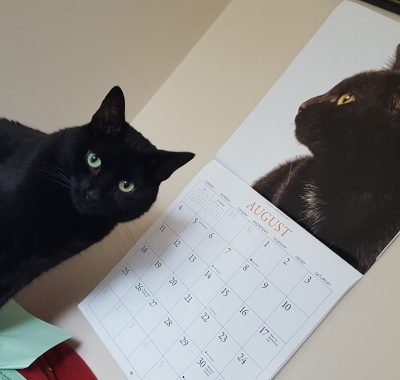
Celebrate holidays and special occasions

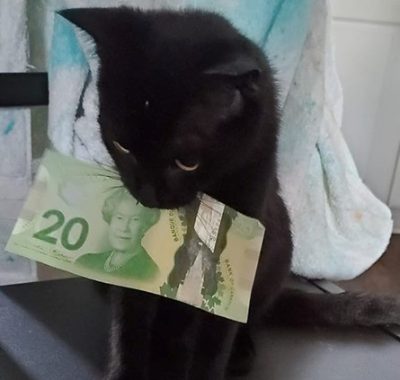
Help provide for the family

Make you laugh

And give you unconditional love

Happy International Black Cat Month!

Do you have a black cat or one that left paw prints on your heart?  Celebrate them today and donate to the SPCA to help shelter kitties in need.

P.S. A special thank you to all the families across Nova Scotia who submitted adorable photos of your black kitties.  Please give them a snuggle from us!

Taylor Mundy

Taylor is the Communications & Development Officer with the Nova Scotia SPCA and proud adoptive fur-mama to Bonnie. She is passionate about raising awareness and funds for local animals in need.

Paws & Support

By Taylor Mundy

The Nova Scotia SPCA believes that strong bonds between people and pets make for stronger communities.  In fact, there are proven benefits when it comes to pet ownership, including improvements to physical, mental and emotional well-being.  Animals can boost your mood and provide companionship and unconditional love.

There are a variety of challenging circumstances that cause devoted families to surrender their pet to the Nova Scotia SPCA.  Over 6,000 pets each year go through the doors at the Nova Scotia SPCA.  Sadly, some are due to pet owners fleeing domestic violence or undergoing short-term hospital treatment.  If there was an alternative, fewer animals would be surrendered into shelters and more families would be kept together.

Here’s where Paws & Support comes in!

We are excited to announce a new pilot program in Halifax Regional Municipality, Paws & Support, after being awarded a $25,000 grant from PetSmart Charities® of Canada.  Paws & Support will be a free program at the Nova Scotia SPCA for dogs, cats and critters while their owners are seeking short-term in-hospital treatment or transitioning out of domestic violence relationships.

While in the care of the Nova Scotia SPCA, owned pets will receive resources and access to veterinary care thanks to funding from PetSmart Charities of Canada.  Owned pets will live with trained temporary foster families.  Once participating pet owners are in a healthy, safe space, they will be reunited with their pet.  To provide extra support, the Nova Scotia SPCA will also provide families with pet supplies and necessities from their Nova Scotia SPCA Thrift Stores.  Space in the program is limited and it will launch in the upcoming weeks.

“Without a close family member or trusted friend to look after their pet, some owners may be reluctant to leave or seek treatment,” says Elizabeth Murphy, Nova Scotia SPCA CEO.  “Because of Paws & Support, pet owners can feel confident their pet is well cared for while they focus on their own wellbeing.  This will help pets, support families and strengthen communities.”

“We’re proud of our ongoing partnership with the Nova Scotia SPCA and are thrilled to support them with this pilot program,” said Dani LaGiglia, regional relationship manager, PetSmart Charities of Canada. “We are pleased to support programs that help families going through a transitional period and that provide them with the peace of mind that their pet is being cared for until they can be reunited.”

Now, here’s where YOU come in!

The Nova Scotia SPCA is looking for 30 new foster families to help with Paws & Support for both dogs and cats.  Fosters will receive full support from the Nova Scotia SPCA during the pet’s stay but will be required to adhere to strict confidentiality.  All animal costs such as veterinary care, food, bedding and toys will be provided.  Interested foster families are asked to complete the Nova Scotia SPCA Paws & Support foster application attached here.

Once foster families are trained, we are looking forward to the official launch of this pilot program.  Make sure to stay tuned!

Taylor Mundy

Taylor is the Communications & Development Officer with the Nova Scotia SPCA and proud adoptive fur-mama to Bonnie. She is passionate about raising awareness and funds for local animals in need.

Versace’s Happy Tail

By Taylor Mundy

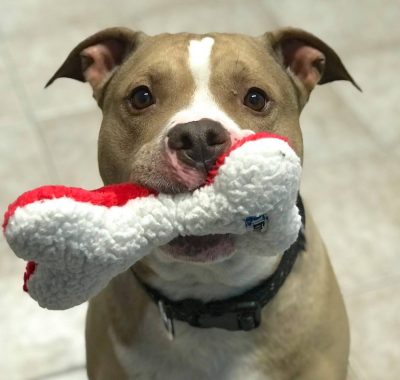
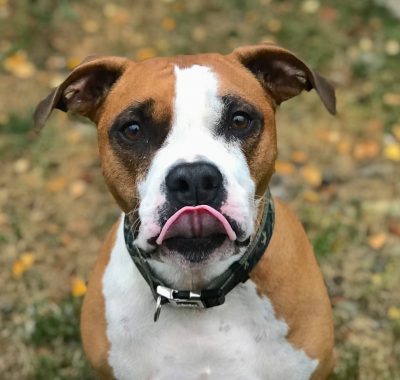
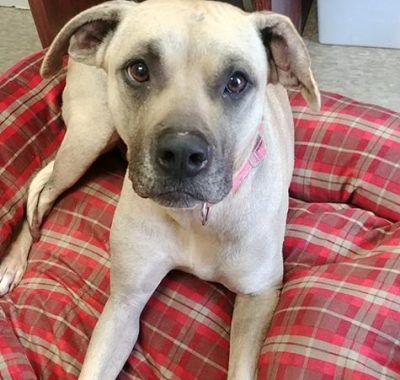
Due to breed-specific-legislation, Versace could not be adopted in Ontario and made the long trek to the Nova Scotia SPCA.  We immediately fell head over heels for this cutie-pie!  Versace was sweet and shy and just needed some help building up her confidence.  She loved to play-play-play all day with her stuffed animals and then snuggle all night.

Versace ended up spending 112 days with the Nova Scotia SPCA awaiting her forever family.

We would scratch our heads wondering why Versace hadn’t been scooped up just yet.  Versace would be an amazing best friend to a lucky, loving family!  Was it because she was an amstaff/boxer mix?  Was it because she was a bit nervous around new people?  We were confident that Versace’s perfect family would come around.

And they did!

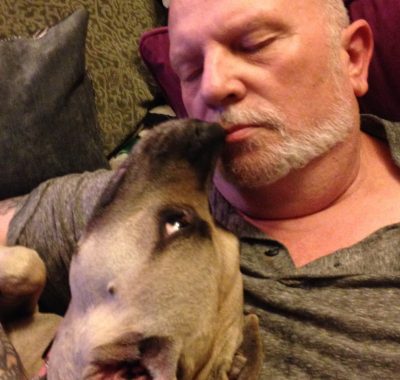
Rick and Linda had just lost their beloved dog of 13 years, Kira.  During that same difficult time, Rick was preparing for major cancer surgery to remove a kidney.  This surgery was one of over 20 Rick had to endure over the years.  Linda shares, “things were very sad and lonely in our home.”

One day before Rick’s surgery, they stumbled upon the SPCA adoptables website.  “Rick saw Versace and was instantly taken,” says Linda.  They couldn’t wait to meet her.  Linda dropped Rick off at the hospital and headed to the Dartmouth SPCA.  “They held her until Rick was healthy enough to meet her.  It was true love all the way around.  The staff at the SPCA were so wonderful and helpful.”  Just like that – they adopted Versace and brought her home.

Rick and Linda changed Versace’s name to Harley, and she was able to leave her past and her old name behind.  “She is very loveable and compassionate,” shares Linda.  “My husband is home with her all the time.  It’s perfect for both of them.  Harley gets him through all his troubles.  She is very sensitive and caring.  She knows just when to snuggle extra and kiss bigger.  I forget all my troubles too when I walk in the door and she almost turns inside out with happiness and kisses.  She’s the best!”

Thriving in her home, Harley celebrated her first #GotchaDay with her new family.  Linda and Rick express, “It is very sad that so many of these breeds of dogs are not able to have a second chance.  They are lovable and very loyal.  We would recommend anyone looking to adopt to consider this breed.  We cannot imagine our life without Harley.”  Thank you, Rick and Linda, for giving Harley the second chance she deserved.

There is zero evidence that breed-specific laws make communities safer.  Regardless of the breed, statistics prove that pets provide comfort and support to their families.  Many dogs that would meet the standard of banned breeds are wonderful, loving family pets.  Here at the Nova Scotia SPCA, we are proudly no-kill and open-admission and we will accept animals regardless of their age, health, gender or breed.  You can be a hero and help care for these innocent shelter pets by donating today.

Taylor Mundy

Taylor is the Communications & Development Officer with the Nova Scotia SPCA and proud adoptive fur-mama to Bonnie. She is passionate about raising awareness and funds for local animals in need.

Don’t Bully My Breed

By Judy Layne

If you were discriminated against, feared or had your fate decided by others based on nothing more than how you look, wouldn’t you want someone to stand up for you?  I know I would.  That’s why it’s so disheartening to animal lovers and animal rescue organizations like the Nova Scotia SPCA that breed-specific bans – or, more accurately, breed-discriminatory bans – still exist.

I strongly believe that each and every animal, like each and every human being, is individual and unique….that they deserve the same chance to show the world who they are on the inside…….that they should be judged not by their appearance, but by their behavior.

Regardless of whether you love, hate or feel completely indifferent to larger breeds like pit bulls or rottweilers, I’d like you to think about your own dog, whatever breed they may be.  Consider how much you love your dog and how much they love you. I’m sure you’ll agree that your dog is distinctly unique in personality, spirit and behavior.  I’m sure you’ll also see an animal who is deserving of a happy life. Now consider if somebody else, who has never even met your dog, tries to threaten their future.  That’s what breed-specific bans look like.

Don’t take my word for it….take a look at the hard evidence and expert opinions against breed-specific legislation from: the American Veterinary Medical Associationthe American Veterinary Society of Animal Behaviorthe Centers for Disease Control and Preventionthe American Society for the Prevention of Cruelty to Animalsthe National Canine Research Council and the Certification Council for Professional Dog Trainers.

  • BSL has not achieved its main purpose – to keep people safe from dog bites. Experts agree that there is no credible evidence that breed-specific bans reduce the number or severity of dog bites.  In fact, many jurisdictions that initially implemented BSL have since rescinded those bans.
  • BSL relies on arbitrary breed labels and generalized descriptions. The majority of North America’s 98 million dogs are mixed breeds, thereby defying lineage classification. The Centers for Disease Control and Prevention examined 20 years of data on dog bites and concluded that it is virtually impossible to calculate bite rates for specific breeds.  They recommend against using breed as a factor in dog-bite prevention policy, stating ‘Any dog of any breed has the potential to bite’.
  • BSL misplaces blame and punishes the innocent. BSL calls for the culling of all dogs of certain arbitrary breeds, regardless of whether they have ever bitten anyone. It thus discriminates against and victimizes responsible dog owners and their innocent pets. BSL does not make irresponsible dog owners liable for their dog’s actions, yet a 16-year study by the National Canine Research Council found that:
    • 85% of fatal dog attacks involved dogs who were not spayed/neutered
    • 76% of dogs who attacked were ‘backyard dogs’ who had little or no positive social interaction with people or other animals
    • 59% of the dogs who attacked had been mistreated, neglected and/or abused
  • BSL is costly to enforce.  Experts agree that BSL is essentially a waste of public resources that could be better spent elsewhere.  The devastated families who loved them pay a much higher price.
  • BSL makes erroneous assumptions about pit bulls’ temperament. The American Temperament Testing Society, an independent research group that has published studies since 1977, reports that American Pit Bull Terriers and American Staffordshire Terriers pass temperament tests at a rate of 87% and 86% respectively. These rates are similar or superior to those of Golden Retrievers (86%), Jack Russell Terriers (85%), Border Collies (82%), Beagles (80%), Miniature Poodles (77%) and Lhasa Apsos (70%).
  • It’s not just pit bulls. Across the U.S. for example, over 75 different breeds (and mixes of those breeds) are currently on a list of banned or restricted dogs.  In some cities/counties, German Shepherds, Rottweilers, Dobermans, Labrador Retrievers and Golden Retrievers are deemed ‘dangerous’ and are therefore banned.  If you think small dogs are excluded, think again.  Even breeds like Pugs and French Bulldogs are on the list in some places!

If BSL doesn’t work, how to we make real and lasting change in keeping people and dogs safe? Experts agree that the solutions aren’t simple and take work, but our focus must be on:

  • regulatory and legal penalties for dog owners that hold them accountable for the humane care and control of their dog, regardless of breed or type
  • education of dog owners about responsible pet ownership – spaying/neutering, socialization, training and pet care
  • education of parents and children regarding safety around dogs
  • education of the general public to change misperceptions and stereotypes of misunderstood dogs

Currently, the dogs most often subject to bans are those breeds labeled ‘pit bulls’.  Yet prejudice against these dogs is based on assumptions and a misunderstanding of their temperament.  Many dogs that would fall into the category of banned breeds are wonderful, loving family pets. They are equally deserving, equally amazing and equally loving when compared to any other dog.   We need to spread the word about how incredible these loyal beautiful breeds truly are, remove barriers to their happiness and that of their loving families, and put a stop to breed bias.

Judy Layne

Judy is a dedicated volunteer with the Nova Scotia SPCA and proud adoptive fur-mama to Gracie. She is committed to speaking for animals who cannot speak for themselves.

Furever Love

By Taylor Mundy

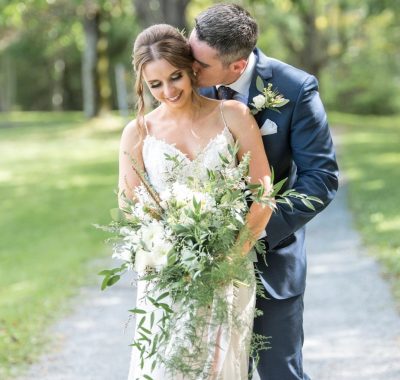
Congratulations – you’re getting married!  This is an exciting time in your life where the focus is all on your love.  When planning the big day, you can incorporate subtle touches to puuuursonalize your wedding… Just like Nicole and Tyler!  This kind couple used their special day to make another animal’s day special.

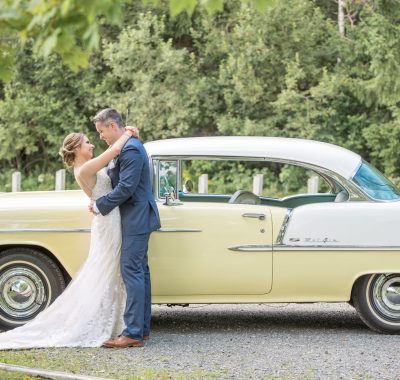
Nicole and Tyler first met while attending St. Francis Xavier University.  They started dating in 2008 and after a decade of love and happiness, they tied the knot in August 2019.  Nicole and Tyler are both passionate animal lovers and have two nephew cats named Garfield and Tom who were adopted from the Cape Breton SPCA.  Although they do not have any pets of their own (yet) they wanted to do something to help furry friends on their journey to their forever families.

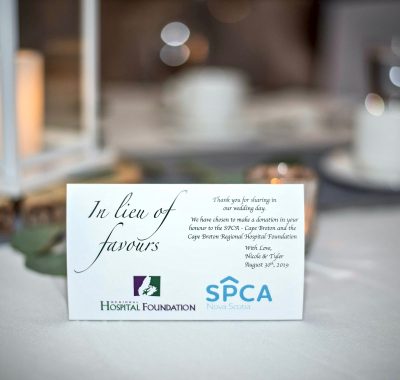
Nowadays, weddings usually involve favors for guests to take home after the celebration.  Planning the favors can sometimes seem like another task on the never-ending wedding to-do list.  Fortunately for the Cape Breton SPCA, Nicole and Tyler used this as an opportunity to make a difference for local animals in need.  In lieu of wedding favors, they made a generous donation to the Cape Breton SPCA.

Nicole and Tyler shared, “Our inspiration to donate to the Cape Breton SPCA derives from our shared love for animals.  Opposed to a materialistic item for our guests to remember our wedding day, we wanted those in attendance to be involved in a larger moment. The Cape Breton SPCA was an easy choice for us make a monetary contribution to as an alternative to traditional wedding favours. We have seen first-hand how the work done by the SPCA can change the lives of people and animals alike and wanted to contribute to these ongoing efforts.”

Not only did our shelter pets love their thoughtfulness, but their wedding guests were thrilled as well!  “Our guests we quite moved by our donation to the Cape Breton SPCA and were remarked on multiple occasions as to how great of an idea it was to make a contribution to a worthy cause. Many of those in attendance on our wedding day have had personal experiences when it comes to the work conducted by the SPCA. Whether this was through animal rescue, rehabilitation or, the greatest of all experiences, animal adoption into their forever home. Our guests, much like ourselves, have true love and compassion for our animal friends!”

Because of Nicole and Tyler’s kindness and generosity, we will be able to purchase necessary supplies and provide services so local animals are safe, happy and healthy.  What a loving gift that gives back!  Thank you, Nicole and Tyler, for saying “I do” and including animals, too!

Psssssst, looking for some more inspiration?  A few other ways you can incorporate your love for animals with your wedding are:

  • Make your Kissing Count – Ditch the tradition of tinging glasses to get the married couple to kiss.  Instead, opt to kiss when guests show some love to the SPCA and put donations in a jar.
  • Furry Friend Bachelor/Bachelorette Paw-ty – Drop by your local SPCA shelter with your friends for an hour to walk some doggos and snuggle some kitties
  • Wedding Gifts for Shelter Pets – In lieu of wedding gifts, ask your guests to donate to the Nova Scotia SPCA.  You can also ask guests to bring food, toys or other Wish List items that our furry friends need.

* Prepping for your wedding?  Please contact Taylor at tmundy@spcans.ca *

Taylor Mundy

Taylor is the Communications & Development Officer with the Nova Scotia SPCA and proud adoptive fur-mama to Bonnie. She is passionate about raising awareness and funds for local animals in need.