Tank’s Happy Tail

By Taylor Mundy

8-year-old Tank was fighting to survive on the streets.  He was missing an ear and was filled with scars, open wounds and broken teeth.  All that changed in cold January when he was brought to the Nova Scotia SPCA.

Our veterinary team treated the wounds on Tank’s face and provided him with the extensive dental care required.  He received around-the-clock medical care and quickly recovered.  Like all SPCA adoptable animals, Tank was fixed so he will not reproduce any kittens that could potentially suffer as a stray like he did.  Once medically cleared, it was time to find Tank a loving home.

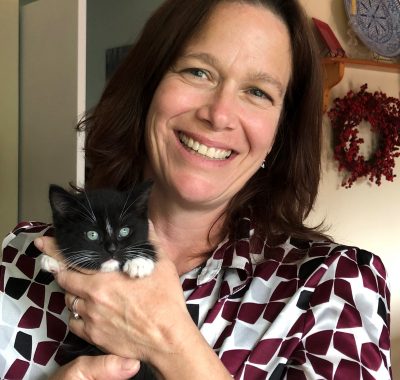
Tank became a local celebrity and was featured on Jack 92.9’s Wet Nose Wednesday segment. A few days later, he locked eyes with his fur-mama Ruby and they became an instant best friends.  Tank fulfilled his lifelong dream of having a family of his own.

Now that Tank has settled into his new home he gets into a different kind of trouble.  He is always on the hunt for extra food!  One day Ruby was cooking spaghetti and Tank was curious to taste what smelled so delicious.  Tank snuck his head into the dish to get a little leftover sauce and turned into an orange cat!  Tank was super pleased with himself up until he realized he was getting a bath to get cleaned up.  After his bath, Tank curled up beside Ruby again, with no grudges held.

Because of the generous support of donors, Tank received all of his needed medical care and his happily-ever-after.  Tank’s story is a special one, but he is just one of the 13,000 animals that we will help this year.  Since January, the Nova Scotia SPCA has spent $719,190 on veterinary care and desperately need your generous support.  Please make your gift today to give innocent pets a second-chance at a safe, happy and healthy life.

Be a hero for animals like Tank.

Taylor Mundy

Taylor is the Communications & Development Officer with the Nova Scotia SPCA and proud adoptive fur-mama to Bonnie. She is passionate about raising awareness and funds for local animals in need.

Protect Against the Summer Scaries

By Taylor Mundy

Summer is finally here!  We all enjoy fun in the sun with our four-legged family members.  However, summer poses unique risks to your pet’s health.  Leaving pets in parked cars isn’t the only tragic mistake people make that can harm or even kill their pet.  Keep your pet safe this summer by following these tips.

Archer enjoying a beach day in Nova Scotia

Pet vs Porcupine – Porcupine quills are very dangerous and can be life-threatening.  Once buried, quills will migrate slowly and start to move deeper into the body.  Quills (especially ones entering the chest or abdomen) have a risk of finding their way to a vital organ, causing severe damage or death.  Do not attempt to pull them out.  Instead, keep your pet as calm as possible and seek veterinary care immediately.

Tick-Tock – While ticks can live all year round, tick activity increases with spring and summer temperatures.  According to the CVMA, tick population has grown 10x over the past two decades – yikes!   Don’t be a tick magnet and learn what to do to protect you and your pet from everyone’s least favourite tourist: the tick.  More information can be found here.

Paws & Pavement – Hot pavement or asphalt can burn your pet’s sensitive footpads.  Walk your dog in early morning or evening when outdoor surfaces are coolest.  To test surfaces before letting your dog walk on them, press your hand onto them for 30 seconds.  If it’s painful for you, it will be painful for your pet.  Avoid walking, running, exercising or playing with your pet during peak heat.

Fireworks – Who doesn’t love a great fireworks display?  Most animals, actually!  Many pets have extreme anxiety and panic when they hear fireworks.  Running away from the noise is a survival instinct and many pets go missing.  It is best to keep your pet inside at home, so they are safe and secure.

Dogs & Hot Cars – High temperatures make it difficult for pets to cool themselves and heatstroke can be fatal.  On top of potentially losing your furry bestie, you could be fined $697.50.  Our SPCA Enforcement Officers locked themselves in a parked car on a warm day to demonstrate the dangers.  Learn more and watch the video by clicking here.

By taking precautions to ensure your pet is cool and safe, you’ll both enjoy a wonderful summer!

Taylor Mundy

Taylor is the Communications & Development Officer with the Nova Scotia SPCA and proud adoptive fur-mama to Bonnie. She is passionate about raising awareness and funds for local animals in need.

Keep your Kitty Inside

By Judy Layne

It breaks my heart every time I see a ‘Lost Cat’ sign on a community mailbox.  Too often, kitty never comes home safely, and another innocent life is lost.  How can we prevent this needless tragedy?

Kessel The Kitty

When you adopt a cat, you commit to giving them a loving home and to keeping them healthy and safe.  The only way to truly do this is to keep them indoors.  Cats are happy being indoors and do not need to be outside to have a fulfilling life. Yet, some owners still struggle with the decision of whether to let their cat out.

The dangers of keeping your cat outdoors far outweigh any benefits.  Just look at the numbers.  Indoor cats live an average of 12.5 years and can reach the ripe old age of 18 or more.  In contrast, outdoor cats live only 2 to 5 years.

Cats that are allowed outside are at risk of:

  • Getting lost or being stolen
  • Being seriously injured or killed
  • Contracting potentially fatal diseases (feline leukemia, distemper) or illnesses they can pass on to humans (rabies, toxoplasmosis)
  • Picking up fleas, ticks or other parasites
  • Becoming ill from eating garbage, poisons or toxic plants
  • Succumbing to frostbite in winter and dehydration or skin cancer in summer
  • Unfixed cats can contribute to the cat overpopulation problem

To keep your cat happy indoors, combat kitty boredom.  Here are some tips:

  • Provide scratching posts to exercise their claws without damaging furniture
  • Give them a place to perch (sofa by a window, window ledge, shelf or cat tree)
  • Turn your windows into a cat movie theatre by putting a bird feeder nearby
  • Let your cat try out different and exciting toys
  • Get a second cat for companionship, especially if you’re gone for long hours
  • Bring the outdoors in by growing cat grass for your kitty to eat.

Please make a smart decision.  Prevent needless tragedy. Help your cat lead a long, safe, healthy and happy life.  Keep your kitty indoors.

Judy Layne

Judy is a dedicated volunteer with the Nova Scotia SPCA and proud adoptive fur-mama to Gracie. She is committed to speaking for animals who cannot speak for themselves.

No More Excuses, No More Dogs in Hot Cars

By Judy Layne

“I thought I’d run into the store for just one thing, but I got stuck in a long line-up.”  Every year, pets suffer and die needlessly when their guardians make the mistake of leaving them in a parked car on a warm day – even for “just a minute”- while they run an errand.

NEVER leave your pet unattended in a vehicle during the summer heat.  Parked cars in warm weather are deathtraps for pets.  Animals don’t sweat; they must rely on panting to remove heat from the body.  High temperatures make it difficult for pets to cool themselves and heatstroke can be fatal.  Short-nosed dogs, senior pets and those with health issues are even more at risk, along with overweight pets and those with thick or dark coats.

Temperatures rise alarmingly fast inside a parked vehicle.  Even on mild days or in the shade, car windows act as a greenhouse, causing temperatures inside the car to soar quickly to dangerous levels.  On a 23◦C day, the temperature inside a parked car can soar to 34◦ very quickly, and on a 32◦C day the interior temperature can reach as high as 43◦C in just 10 minutes! At these temperatures, your pet can suffer severe heatstroke, irreversible brain and organ damage… or worse.

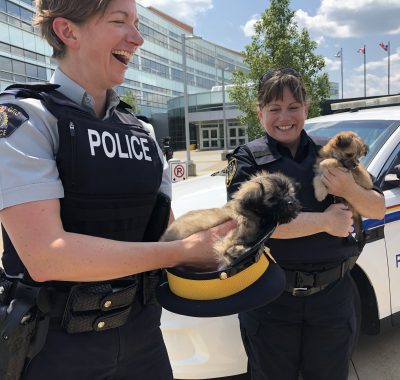
Our SPCA Enforcement Officers joined forces with the Nova Scotia RCMP and sat inside a vehicle on a warm day for 20 minutes to show just how dangerous it is.  Watch their experience below.

If these numbers aren’t enough to convince you to leave your pet at home in warm weather, maybe this fact will.  Thanks to regulations in Nova Scotia, people who leave their pet in an unattended vehicle in conditions that cause distress will be fined $697.50.

What should you do?

If you see an animal in distress in a parked vehicle, here are the steps to take:

  • Assess the situation.  Signs that a pet may be in distress from overheating include exaggerated panting, rapid breathing, drooling, dark pink gums, lack of coordination, inability to get up, vomiting, convulsions or collapse.
  • Note relevant information:
    1. vehicle’s description – make, model, license plate, color, exact location
    2. pet’s description – species, size, color, breed (if known).
  • Try to locate the owner first.  Ask the nearest stores/businesses to make an announcement for the owner to return to their car.
  • If you cannot find the owner and the animal is in distress, call your local police or RCMP and stay at the vehicle until police arrive.
  • File a report with the Nova Scotia SPCA online here or by calling 1-888-703-7722

What should you NOT do?

  • Do not break the windows.  While you understandably may have the urge to smash the window to free the distressed pet, you could be liable for damages.  Only the RCMP, local police and the Nova Scotia SPCA have the authority to enter a vehicle lawfully to help a pet in distress.
  • Do not consider air conditioning or the windows cracked open as an option.  This is not a guaranteed safe solution since pets have died as a result of a malfunctioning system (not to mention being stolen along with the car).

How can you help?

  • Help us spread the word!  Share our video and article on social media and tag us on Facebook @NSSPCA on Twitter @NSSPCA on Instagram @NOVASCOTIASPCA or e-mail to a friend
  • If you plan to run an errand (no matter how quickly) that your pet can’t accompany you on, keep them safe and cool at home.
  • If you have your pet with you, shop at dog-friendly businesses, restaurants or accommodations.  We’ve compiled a list here for you!

Please remember – while you may think you’re making your pet happy by bringing them along for the ride, you could very well be jeopardizing their life.  No more excuses, no more pets in hot cars!

Judy Layne

Judy is a dedicated volunteer with the Nova Scotia SPCA and proud adoptive fur-mama to Gracie. She is committed to speaking for animals who cannot speak for themselves.
A Sweet Story from a Bitter Beginning

By Taylor Mundy

Cotton Candy was one of 22 dogs who came to the SPCA through a cruelty seizure in Kings County.  Despite living in harsh conditions, Cotton Candy was super-sweet and special.  Upon arriving at our shelter, we discovered she was just days away from expecting a litter of puppies!

On February 5th at the Dartmouth Shelter, we found out that “sweetness” ran in the family when Cotton Candy gave birth to what might be the cutest puppies we’ve ever seen!  But when several of the puppies began to take ill, we learned that some bad traits ran in their bloodline as well –sadly, likely the result of inbreeding.

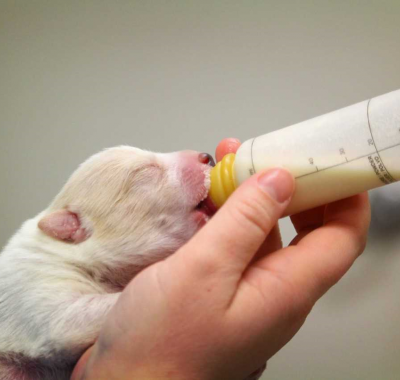
Many of the puppies were born with heart problems while Cotton Candy and her litter-mates each dealt with socialization problems, heart complications, and mobility issues of their own.  But the good news is that the pups couldn’t have been born in a better spot. They received the urgent treatment they needed at the SPCA Hospital and were bottle-fed around the clock by a care team when Cotton Candy wasn’t able to supply enough milk.

Once old enough, Cotton Candy’s puppies joined the WOOF Program.   WOOF, which stands for “Working on our Future,” is a joint initiative between the Nova Scotia SPCA and the Department of Justice where puppies get to visit the Central Nova Scotia Correctional Facility in Burnside for training. Under the direction of an expert SPCA trainer, they are paired with screened inmates who prepare the puppies to be adoption-ready. The puppies receive the care and socialization they need to ensure their success in a forever home, while the inmates are given the opportunity to learn responsibility, patience, and respect– skills that can help change the direction of their lives. They receive unconditional love from each other that may have been missing in their lives before. It’s a win-win for everyone!

All 22 dogs and Cotton Candy’s puppies found loving, kind homes.  Please join us in wishing the puppies well in their journey to happiness!  If you’re interested in adding a furry friend to your family, check out our adorable adoptable animals here.

Taylor Mundy

Taylor is the Communications & Development Officer with the Nova Scotia SPCA and proud adoptive fur-mama to Bonnie. She is passionate about raising awareness and funds for local animals in need.

Foster Families are Fabulous

By Judy Layne

Foster families are often the unsung heroes in animal welfare.  They open their homes and hearts to animals only to part with them weeks or months later.  The willingness of foster families to love and let go brings about much good.  For the animals they foster, these families are the pathway to a new life….the bridge between what was and what can be.

Each year, hundreds of animals that cross the Nova Scotia SPCA’s doorstep need temporary foster homes.  They are either too young to be adopted, are recuperating from illness/surgery or need some extra ‘TLC’ before finding their new forever homes. During the summer months the number of kittens soars, dramatically increasing the need for foster homes where they can grow and play until they are old enough for adoption.

I caught up with one of the SPCA’s fantastic foster moms – Fiona McAllister – and asked her to share her experiences.  Fiona’s family has been an integral part of the foster program for almost 3 years and have fostered an amazing 78 cats and kittens to-date! “Making the decision to become a foster family was a no-brainer,” says Fiona.  “I learned about the program from a colleague who was caring for four precious two-week old bottle babies.  It was hard to believe that I could help to save animals’ lives and be constantly surrounded by adorable kittens.”

The motto of the Nova Scotia SPCA’s foster program is “You supply the home and the love; we supply everything else.”  Fiona says she’s surprised at how many people ask her if she has to buy supplies for her foster kitties.  “I tell them that you don’t have to buy anything.  The SPCA provides any required medical care and supplies all the food, dishes, bedding, litter and everything else to help the animals have a comfortable stay in your home.  I emphasize that foster families provide things you can’t buy in a store – love, attention and nurturing.”

I asked Fiona what responsibilities her foster family has. “We need to ensure that the cats and kittens in our care are eating and drinking properly every day.  We check for signs of illness such as crusty eyes or runny noses and bring any issues that may arise to the SPCA’s attention.  We also take them to the shelter for check-ups and vaccinations as required.”  She adds, “We make sure our foster kitties are socialized with a variety of people and ultimately, with our own cats, to build their confidence and adaptability.  We also introduce kittens to different household noises like hair dryers and vacuums to ease their transition to a new forever home.”

The time commitment and length of stay vary with each foster animal’s situation.  Fiona says “We spend an average of one hour a day tending to their basic needs (feeding, scooping litter, administering meds).  We also spend as much time as possible cuddling and playing with them.” The average length of stay is 3-6 weeks for cats. “The SPCA can usually customize the foster animals you take home to what works best for your lifestyle and schedule.”

If you’ve never cared for kittens or administered medications, Fiona says “no problem – the SPCA will teach you.”  As well, the SPCA’s foster team is just a phone call away for ongoing support.  “I ask lots of questions and feel very comfortable asking SPCA staff anything.  I learn something new each time I see them,” she relates.

I asked Fiona if it’s difficult to say goodbye to her foster kitties.  “Many people have said to me that they’d love to foster, but they know they’d want to keep them all.  It makes me sad when I hear those words.  Every time I have to say goodbye, my heart breaks a little.  But when I let my foster kitties go, I know that they will be adopted by amazing families who will pick up where I left off and cherish them forever.” And there’s always another kitty waiting in the wings for a chance to be saved.  Fiona says, “I tell people that the best part of saying goodbye is saying hello to new adorable kitties who need me.”

Fiona’s family finds that fostering is a hugely rewarding experience and she encourages everyone to consider becoming a foster family.  She sums it up purr-fectly: “It’s the greatest feeling in the world to know you played a role in changing an animal’s life for the better; in giving them a second chance at happiness. When babies come to us underweight, timid or sick and we return them happy, healthy and confident, we know we’ve done a really good job.”

Fiona’s most memorable fostering experience was last July.  A heartless person had sealed 3 adult cats and 10 very young kittens in a cardboard box and thrown them in a dumpster. Thankfully, someone found them just in time and brought them to safety at the Nova Scotia SPCA.  “I volunteered immediately, and we received the 2 nursing mama cats and the 10 kittens.  It was the hardest and yet most rewarding experience ever.  Both adults and all the kittens were in very bad shape and required significantly more care than the average group of foster kitties.  But in the end, our family brought very happy, healthy and completely spoiled-rotten kitties back to the SPCA to be adopted.  I smile every time I think of them.”

The Nova Scotia SPCA is always looking for more foster families and with kitten season upon us, we need your help now.  Please don’t wait for ‘some day.’  You can make a difference today by signing up.  Click here to learn more about fostering opportunities.

Judy Layne

Judy is a dedicated volunteer with the Nova Scotia SPCA and proud adoptive fur-mama to Gracie. She is committed to speaking for animals who cannot speak for themselves.