There are special people in this world. People with big hearts, willing to step up to give homeless animals with special needs a loving home and a second chance at the happiness they deserve. Robyn Horne and her fiancé Brandan are two such people. And Sparrow, a tiny kitten with severe deformities in her front legs, is the latest lucky recipient of their love and kindness.
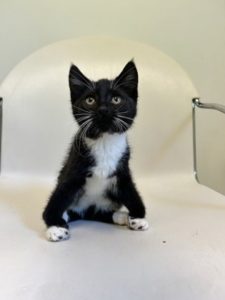 Sparrow was found stray and brought to safety at the Kings SPCA Shelter in June 2024. She was only a month old, very small and needed to gain weight in order to be spayed. Sparrow had severe bends in both of her front legs and had to walk on the sides of her feet and ankles.
Potential adopters were educated on Sparrow’s deformities and were told that she is at a high risk of arthritis and pressure sores long-term. It was also important for Sparrow to be kept indoors only and to maintain a healthy weight. Sparrow was adorable, yet due to her condition, this sweet, tiny girl waited patiently day after day for the purr-fect family to fall in love with her.
Enter Robyn and Brandan. They went to the Kings Shelter ‘just to pet the cats.’ Robyn recalled “Even though I was there to pet ALL the cats, I ended up sitting beside Sparrow and playing with her through the bars of her kennel almost until closing. With her deformities/little legs, I knew she likely wouldn’t be the top pick for most households. I wanted to take her home then and there, but she still wasn’t ready, having not been spayed. I’m sure I annoyed the worker who was there, trying to ensure that they DEFINITELY knew that I wanted her as soon as she was ready! When I went home that night, I researched for HOURS the kind of care she might need. The idea of her going home with someone else wasn’t even something I was willing to consider.”
Three years ago, Robyn and Brandan adopted Luka, a nine year old special-needs kitty with a laundry list of health issues, including a heart murmur, enlarged heart and skin condition. Robyn chuckled “It’s needless to say I have a soft spot for the kitties who need a little extra love and care. Luka was from the Kings SPCA Shelter too, and we wanted to adopt from them again after the awesome experience we had. They did an amazing job at answering my MANY questions about Sparrow. Before I brought her home, I knew that I had everything that I needed for a kitten like her.”
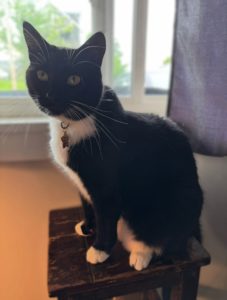
When the couple first brought Sparrow home, she was essentially running around on her wrists. “We immediately began researching if there was anything non-surgical that we could do to help her, said Brandan. “The first thing was to try to limit her running and jumping, which proved difficult with such a high- energy kitten like her. Our best solution was to purchase a large, fully enclosed pen and have her stay in there except for supervised trips out. It took nine months for her to finally be improved enough that she could be out of the pen 24/7 and run and jump to her heart’s content without constant supervision.”
The couple also started physio shortly after bringing Sparrow home. Robyn explained “Walking on her wrists would have ended up causing more issues if we had waited. The physio consisted of gently stretching her legs and holding her up, so over time she could put weight on her paws instead of her wrists. There was no way to ‘fix’ the deformities, but this helped her legs become stronger and straighter as she grew. Now to the untrained eye, her legs look perfectly normal, with only a small bump in the bone of each leg that you can only notice if you feel them. Arthritis is almost a guarantee when she gets older, but it’s something we watch closely, and are prepared to deal with when the time comes.”
Sparrow’s legs don’t slow her down. Brandan shared “We always joke that someone forgot to tell Sparrow that she’s supposed to have a disability! She simply doesn’t even consider whether she can do something or not, she just does it! She loves to jump up onto the window sill, completely ignoring the cat tower with stairs that we put there specifically to help her. She can (much to our dismay) jump up onto the counter if she sees something interesting or climb the shower curtain if she manages to slip into the bathroom behind you. I can’t really think of one thing that she can’t do that normal cats can, now that she’s grown and we’ve had such success in straightening out her legs.”
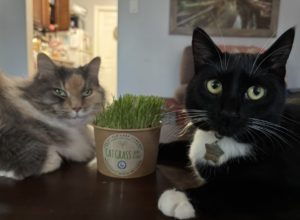
As to Sparrow’s relationship with her furry siblings, Luka and her have grown into somewhat of a ‘grumpy older sister that secretly loves her annoying younger sister’ dynamic. Sparrow also has an older rabbit brother Tucker, who is actually bigger than her. Robyn said “He is also pretty old and grumpy too but has a soft spot for Sparrow. I always catch them lying together when he’s out running around, or Sparrow lying beside or on top of his kennel when he’s in there.”
Sparrow loves life and finds joy in everything. “She’s always speeding around the apartment, even if she knocks a few things over in the process” said Robyn. “A straw wrapper? Super exciting new toy. Mom’s shoe? Perfect place to hide snacks and toys for later. An old box? Her favourite bed ever!”
Sparrow has brought much laughter to the couple’s home. “Living with Sparrow demands a certain level of mental fortitude, unless you’d like to be outsmarted by someone that sleeps in a shoebox!” chuckled Robyn. “If she ever catches you slacking on one of the rules of the house, you better expect her to take advantage of it. As much as she’s brought a bit of stress and chaos into our life, she’s brought twice as many laughs and unconditional love. We’ve had her now for two happy years. She’s the bright, youthful element that our home was missing.”
Robyn’s advice for anyone looking to adopt a special-needs pet? “Think it through carefully and DO YOUR RESEARCH. While you should do research when adopting any pet, it’s twice as important when that pet has special needs. It may take more work than you thought, and you need to be willing to adjust to that. Be 100% sure that you can give them the care they need, and they don’t end up back at the shelter because you bit off more than you can chew. I think sometimes people get caught up in wanting to be the hero for a special-needs animal that needs a home, when sometimes the best thing you can do is let them go to a home that’s ready for them.”
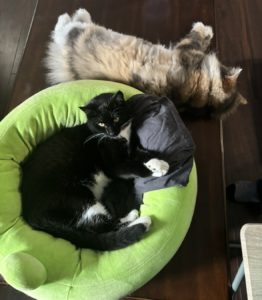
And the couple’s final thoughts? “If you have the time and means, don’t let a disability deter you from adopting. Pets with disabilities may need some extra time and patience, but they deserve a chance to show you how amazing they are. We love both our girls and we wouldn’t change them for the world. “
Understanding the commitment involved in adopting a special needs pet is crucial to a happy, healthy relationship. There are important things to consider before adopting a pet with special needs.
- Think about any long-term dietary requirements, special medications or treatments your pet will need. Pets with behavioural issues may need special training; those with mobility challenges may need therapy or surgery. Ensure you can fit these costs into your family’s budget.
- Your pet may need medications/injections at specific times of day. Ensure you’re available to do this.
- Talk with your family about the challenges that come with adopting a special needs pet and ensure everyone’s onboard.
- Your pet may need more frequent vet visits. Pets with an injury or physical disability may need assistance with standing or walking. Some may need you to physically accompany them outside for bathroom breaks, as opposed to simply being let out.
The Nova Scotia SPCA makes every effort to place special needs pets with their perfect human match. Before deciding to adopt, speak to shelter staff since they’re familiar with the animal and consult with your vet to get a good understanding of the pet’s ongoing requirements. Whatever the pet’s special needs, the SPCA will be there before and after adopting to support you by providing information and advice.